

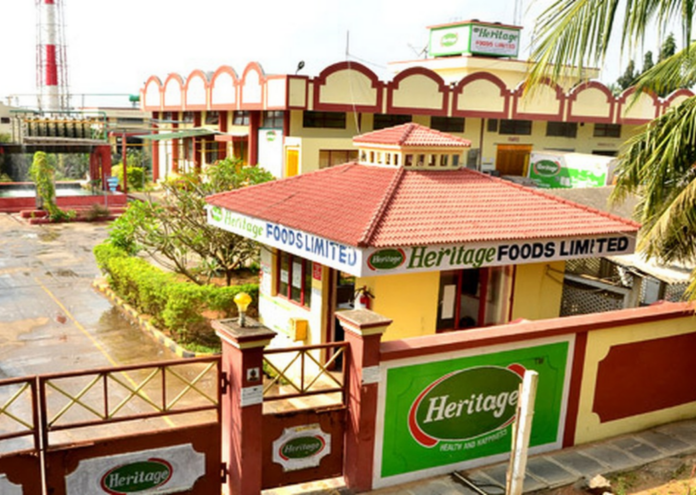

From a milk-led business built around farmers and households, Heritage Foods has evolved into a diversified dairy company, combining scale, consumer-led innovation and a strong value-added portfolio.
Building a dairy business in 1992 meant solving two problems at once: securing a reliable supply of milk from farmers and earning the trust of consumers who depended on its freshness every day. Heritage Foods was set up on June 5 that year with this dual challenge at the centre of its business model. The ambition was not simply to sell dairy products, but to create an organised system connecting farmers, processing infrastructure and household consumption.
That meant building the business from the ground up: establishing village-level procurement, investing in chilling and processing, and developing a consumer brand in parallel. Over three decades later, the company’s operations span 17 states, connecting more than 3,00,000 dairy farmers across 3,000-plus villages with a consumer base of over 10 million. Its scale has grown, but the founding equation—farmer livelihoods, dependable dairy and disciplined growth—continues to shape its strategy.
Building the Value Chain, Link by Link
The early years presented a complex operational challenge: Heritage had to develop its procurement ecosystem, infrastructure and consumer market simultaneously. It needed to establish trust with farmers, set up village-level collection points, invest in chilling and processing facilities, and build demand for its products. In dairy, the reliability of the consumer proposition depends on every stage of the chain, leaving little room for disconnected expansion.
The company describes its growth as largely organic; built village by village, farmer by farmer and market by market. Its approach was also a shift in how dairy could be organised: a professionally managed private enterprise could create value for farmers, consumers and shareholders while building a scalable operation.
Capital efficiency and asset productivity were important considerations as the business grew. Rather than pursuing expansion at any cost, Heritage says it prioritised balance-sheet strength and sustainable growth, a discipline it continues to apply to its investments and operating decisions.
The Infrastructure Behind Farm to Home
Heritage’s operating model depends on an integrated cold chain connecting milk procurement, chilling, processing and distribution. The company’s procurement network is supported by on-ground representatives and infrastructure designed to preserve milk quality and move it efficiently into processing.
Procurement and Processing Network
This infrastructure supports a cross-regional sourcing and distribution network. Heritage reports operations across 17 states, with direct links to more than 300,000 dairy farmers across over 3,000 villages. Its consumer-facing network includes more than 850 Heritage Parlours and 146 Heritage Happiness Points, alongside its broader distribution channels.
The combination of procurement reach, chilling capacity and processing infrastructure gives the company a platform to serve daily dairy requirements while extending its presence into newer product segments. The company’s challenge is to maintain consistency and freshness across a wide operating footprint as it broadens the range of products moving through the network.
Trust as a Business Principle
Heritage summarises its guiding philosophy in three principles: delight the consumer, empower the farmer and maintain financial discipline. The company’s leadership describes these as interconnected responsibilities: consumers depend on the quality of products brought into their homes, farmers depend on reliable procurement and payments, and shareholders expect capital to be managed prudently.
The company says this philosophy was tested during a recent period of constrained milk availability and rising procurement costs. Supporting its farmer ecosystem through that period created short-term pressure on profitability, but Heritage maintains that sustaining long-term relationships and protecting product quality take precedence over immediate financial considerations.
In dairy, where consumers purchase frequently and product trust is built through everyday experience, quality remains a non-negotiable part of the proposition. Heritage’s stated approach is to protect that confidence through market volatility rather than compromise it for short-term gains.
A Portfolio Moving Beyond Milk
Milk remains Heritage’s largest category, reflecting its role as a frequent household purchase and the foundation of the company’s relationship with consumers. But its portfolio strategy increasingly extends to differentiated dairy products and specialised brand platforms that address distinct nutritional, lifestyle and indulgence occasions.
The Heritage master brand anchors the core portfolio, including milk, curd, paneer, ghee, butter and buttermilk. Alongside these staples, the company has developed specialised platforms: Livo for nutrition-led and mindful snacking, Nourish+ for high-protein dairy, Sampurna for A2 dairy, Alpenvie for ice cream and GETAWAY for indulgence with better-for-you attributes, including high protein and zero added sugar.
Partnerships that Strengthen Capabilities
Heritage’s development has involved building capabilities across procurement, manufacturing, quality, innovation, marketing and distribution. The company points to partnerships with global technology providers such as Tetra Pak, GEA and SIG as important to strengthening its processing, packaging, automation and food-safety capabilities.
These relationships have supported investments in manufacturing efficiency and product quality, while helping the company bring differentiated products to market. Partnerships across modern trade and quick commerce have also helped Heritage respond to changing shopping behaviour, improve product discovery and build visibility for newer categories, including high-protein, probiotic and better-for-you dairy.
GETAWAY represents another dimension of this strategy. The company describes the brand as a way to engage younger consumers seeking high-protein, low-sugar and mindful indulgence options, complementing Heritage’s existing strengths in manufacturing, quality and distribution.
For Heritage, the value of a partnership is measured not only by immediate revenue, but also by whether it strengthens business capabilities, deepens consumer understanding and supports long-term growth.
Shamirpet: Scaling the Ice Cream Ambition
Heritage Foods’ greenfield ice cream plant at Shamirpet, near Hyderabad, marks an important step in scaling its presence in the ice cream and frozen desserts market. The facility has been designed with sufficient capacity to support the company’s ambition of building a ₹500–600 crore ice cream business over the next several years, while its advanced manufacturing technology provides flexibility for product innovation alongside consistent quality and manufacturing standards.
The facility will support Heritage’s portfolio across different consumption occasions, with Alpenvie addressing mainstream indulgence and GETAWAY targeting the emerging demand for high-protein and low-sugar options. Beyond adding manufacturing capacity, the investment strengthens the company’s ability to expand its ice cream distribution, respond to regional consumer preferences and leverage its existing cold-chain and market infrastructure.
The Shamirpet investment is part of a wider value-added dairy strategy, with the segment already contributing more than 40% of the company’s revenues and growing faster than the overall business. With investments of more than ₹200 crore annually, the company is directing capital towards value-added processing, cold-chain infrastructure, manufacturing technology and future product innovation.

Edited Excerpts:
With changing consumer preferences creating opportunities in value-added dairy and packaged foods, how is Heritage Foods accelerating its transformation into a consumer-centric food company?
Milk remains at the heart of Heritage Foods and continues to be the foundation of its relationship with consumers. What is evolving is how consumers consume dairy and the specific benefits they seek from it. Rising demand for protein, probiotics, gut health, convenience and mindful indulgence is creating new opportunities within the category. Heritage is responding by taking a more consumer-centric approach, identifying changing needs, consumption occasions and barriers to adoption, and developing differentiated propositions around clear benefit platforms. The company’s transformation is therefore not about moving beyond milk, but about expanding dairy’s relevance across more occasions and needs. By thinking increasingly like a consumer products company, Heritage aims to evolve into a consumer-centric dairy nutrition business with a larger role in consumers’ daily lives.
Quick-commerce is reshaping the way consumers purchase food and dairy products. How is Heritage Foods adapting its distribution and product strategies to capitalise on this fast-growing channel?
Quick-commerce is moving beyond being a new sales channel to reshape how consumers buy dairy and how companies manage supply chains. Traditional dairy systems were built around planned replenishment, larger loads and inventory efficiency; quick commerce places greater emphasis on immediate availability, making stock-outs a direct loss of sales. It is also creating new consumption occasions, from post-workout protein drinks and probiotic buttermilk to paneer for dinner or ice cream as an impulse purchase. At the same time, the channel is emerging as a discovery platform, helping products such as high-protein paneer, probiotic curd, low-sugar ice cream and nutrition-led offerings reach relevant consumers faster. For Heritage, this calls for sharper assortment planning, faster replenishment and data-led supply chains that respond to local consumption patterns. The ability to combine innovation with supply-chain agility is increasingly becoming central to the consumer experience.
As consumers increasingly seek quality, convenience, and health-focused products, what role does premiumisation play in Heritage Foods’ strategy for expanding its dairy portfolio?
Consumers are willing to pay more only when they experience a meaningful benefit—whether that comes through better nutrition, higher protein, lower sugar, superior ingredients, greater convenience, richer taste or a better overall consumption experience. The premium is therefore a consequence of value creation, not the starting point.
At Heritage, premiumisation is about creating products that consumers believe are worth paying more for because they deliver a superior experience. Ultimately, sustainable premiumisation is built on consumer trust and consumer delight.
The growing contribution of yogurt, paneer, and other value-added products reflects changing consumer preferences. How is Heritage Foods capitalising on this opportunity to strengthen its competitive position?
The growth of value-added dairy is closely linked to the broader shift we discussed earlier—the migration from homemade and unbranded consumption towards trusted branded solutions.
However, we believe the future opportunity extends beyond simply participating in value-added categories. Over time, categories themselves can become commoditised. The real opportunity lies in building brands that address clearly defined consumer needs and occasions.
This is why we have invested in platforms such as Livo, which focuses on mindful snacking and nutrition; Nourish+, which addresses the growing demand for high-protein products; Sampurna, which caters to consumers seeking A2 dairy solutions; and GETAWAY, which combines indulgence with better-for-you benefits.
As competition for milk procurement intensifies and input costs remain elevated, what measures are being taken to strengthen the sourcing network and protect profitability?
At Heritage, milk procurement begins with farmer prosperity. On any given day, more than 1.5 lakh farmers pour milk into our network. Our objective is not merely to secure milk supply; it is to help these farmers build sustainable and growing dairy businesses.
We have set ourselves an ambitious goal of doubling the nominal income of our farmers over a five-year period. Achieving this requires annual income growth of roughly 14–15%. Importantly, milk price increases alone cannot deliver that outcome. A significant portion of the improvement must come from higher productivity at the farm level.
This is why we invest extensively in animal induction programmes, artificial insemination, increasing adoption of sex-sorted semen, breed improvement initiatives, animal health services and nutrition advisory programmes. We work closely with farmers to improve feeding practices, balanced rationing and productivity per animal.
These interventions help farmers produce more milk efficiently while improving the quality and consistency of supply. In turn, stronger farmer ecosystems create stronger sourcing networks.
What is the current addressable market for Heritage Foods’ value-added dairy and how will it expand over the next decade across geographies?
The opportunity is substantial because many of the categories we participate in remain under-penetrated from an organised branded perspective. As consumers increasingly prioritise convenience, consistency, hygiene, nutrition and trusted brands, we expect this migration towards organised branded products to continue. At the same time, newer segments such as protein-rich dairy products, probiotics, yogurt, flavoured milk, premium beverages and better-for-you indulgence categories are creating entirely new growth opportunities.
The next decade of Indian dairy growth is unlikely to be driven solely by higher milk consumption. It will increasingly be driven by creating more value from every litre of milk through nutrition, convenience, premiumisation and innovation. We also expect the opportunity to expand geographically.
What key developments or innovations are driving the company’s leadership position in the market?
Our competitive advantage comes from the combination of three factors: superior capabilities, a unique operating structure and a strong sense of purpose.
- Superior capabilities: Heritage has developed expertise across consumer understanding, R&D, product innovation, manufacturing, procurement and route-to-market execution. By identifying evolving consumer needs and emerging trends, the company translates insights into differentiated products and brands.
- Unique operating structure: Its federated manufacturing network brings operations closer to farmers and consumers. Shorter farm-to-consumer distances help preserve freshness, maintain quality and address local market needs. The combination of small-batch processing and modern manufacturing technologies further strengthens this model.
- Strong sense of purpose: Heritage’s mission of delighting every household with fresh and healthy products while empowering farmers guides its decisions on quality, innovation, customer relationships and long-term value creation. Together, these three pillars form a competitive advantage that is difficult to replicate.
What are the challenges Heritage Foods is facing from the plant-based dairy segment that is rapidly evolving in India, and does it pose a structural threat or remain niche?
Plant-based alternatives remain a relatively small part of India’s food landscape, while dairy continues to play a central role in the country’s nutrition, cuisine and everyday consumption. However, consumers are becoming more informed and experimental, with some exploring plant-based options for lifestyle, sustainability or dietary reasons. Heritage views this as an evolution of consumer choice rather than a direct threat to dairy. The larger opportunity, it believes, remains within dairy itself, particularly as consumers seek higher protein, probiotics, gut-health benefits, lower sugar and greater convenience. The company will continue to track these shifts, while evaluating opportunities based on genuine consumer needs and its ability to create differentiated value, rather than entering categories simply because they represent emerging trends.
How is Heritage Foods tapping into the health and wellness segment that plays a significant role in the growth of categories like Greek yogurt, whey protein, and pro biotic drinks among its consumers?
Health and wellness is no longer a niche trend. It is increasingly becoming a mainstream consumer behaviour. Today’s consumers are reading labels more carefully and actively seeking products that offer functional benefits such as protein, digestive health, immunity support and lower sugar.
Our approach has been to deliver these benefits through formats that consumers already know, trust and enjoy. Products such as Nourish+ High Protein Paneer, Livo High Protein Yogurts, our probiotic offerings and other nutrition-led innovations are examples of this strategy in action.
Importantly, we do not believe consumers want to choose between nutrition and enjoyment. The most successful products are those that combine both. Take Nourish+ high-protein paneer for example. While the 60g Protein claim may encourage trial, but it’s the uncompromising taste and affordability that ultimately drive repeat consumption.
We see considerable opportunity in protein-rich dairy, probiotics, fermented products and other functional nutrition segments. Given dairy’s natural nutritional credentials, we believe it is uniquely positioned to play an increasingly important role in India’s health and wellness journey.