


From a Rs 50,000 bet on Just Desserts in 1990 to Olive Bar & Kitchen in 2000, and then 15+ concepts across 40+ locations, the PepsiCo–IMAGES Food Service Awards 2026 honours a restaurateur who built brands around food, design, culture, conversation and people—and whose creative partnership with Sabina Singh became an equally important part of the Olive story
There was a time when eating out in India largely meant going to a hotel restaurant. Then came AD Singh. In 1990, he opened Just Desserts, a jazz café serving coffee and desserts. A decade later, he opened Olive Bar & Kitchen in Bandra. In between—and after—came an extraordinary succession of ideas: Copa Cabana, Soul Fry, Soul Kadi, The Bowling Company, Suzie Wong and, eventually, a portfolio that grew to include Olive Beach, Olive Bistro & Bar, SodaBottleOpenerWala, Guppy, The Fatty Bao, Monkey Bar, The Grammar Room, The Hoppery, Olly, Toast & Tonic and newer concepts such as Call Me Sofia.
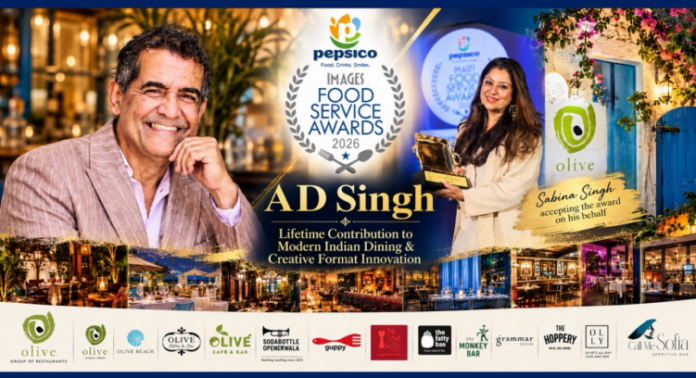
At the PepsiCo–IMAGES Food Service Awards 2026, AD was recognised with the Lifetime Contribution to Modern Indian Dining & Creative Format Innovation award. The citation describes a journey from Just Desserts in 1990 to Olive Bar & Kitchen in 2000 and an evolving portfolio of distinctive concepts spanning cuisines, formats and experiences. It also recognises something perhaps more enduring than the restaurants themselves: his role in nurturing chefs and hospitality talent.
AD could not be there to collect it. His flight was delayed, so his wife, Sabina Singh, accepted the award on his behalf.
And perhaps the trophy could not have been in safer hands.
Not just because Sabina was there to receive it, but because she has been one of the creative hands behind much of what makes the Olive world look and feel like Olive. The journey has always had an AD-and-Sabina dimension: AD shaping the ideas, concepts, food and business; Sabina giving many of those ideas their visual personality, atmosphere and emotional texture.
The Rs 50,000 Bet That Started It All
AD did not begin as a restaurateur. Born in Delhi and raised in Mumbai, he studied at Cathedral and John Connon School before going to Lafayette College in Pennsylvania on a scholarship, graduating in electrical engineering. He subsequently worked with TCS and Cadbury before deciding that the corporate path was not for him. He spent time with NGOs and also wrote a weekly food column for The Metropolis in the 1990s.
The entrepreneurial trigger came in 1988, when he organised a boat party for his sister’s wedding. The party worked. AD saw a business opportunity and created Party Lines, a boat-party planning service. Then came the idea that would change his life. AD had a sweet tooth and believed there was room for a place where young Mumbai could enjoy good desserts, coffee and music. He borrowed Rs 50,000 from his mother and opened Just Desserts in 1990. It was a jazz café serving coffee and desserts, and it became an immediate success. AD has recalled that the investment was recovered remarkably quickly; contemporary and retrospective accounts describe it as a defining early standalone café concept.
The significance of Just Desserts was larger than its size. It demonstrated that a restaurant could be a destination without being inside a five-star hotel. That idea would become the foundation of his career.
Before Olive, There Were Many Experiments
AD’s journey to Olive was not a straight line. It was a succession of experiments that helped him understand not just food, but the business of creating places where people wanted to spend time. He helped develop Jazz by the Bay, introduced Copa Cabana in 1996, launched Soul Fry and Soul Kadi in 1998, and created The Bowling Company in 1999. Suzie Wong, described as a floating bar, followed around the time Olive opened.
That sequence is important because it explains something fundamental about AD’s approach. He was not trying to build one restaurant and replicate it. He was testing consumer occasions—jazz, desserts, Latin American food, coastal Indian food, bowling, bars, leisure and dining. Each concept taught him something about location, customers, design, entertainment, food and, perhaps most importantly, what people wanted to do when they went out. By the time Olive arrived, he had accumulated a library of experiences.
Then Came Olive
In November 2000, AD and Sabina opened Olive Bar & Kitchen in Union Park, Bandra. The location was not then the dining destination it would become. Olive’s white walls, blue door, Mediterranean-inspired food and relaxed atmosphere created something distinctly different from the formal restaurant experience associated with luxury hotels. The official Olive history describes it as a rustic hideaway where food, drink, conversation and laughter flowed.
The restaurant would go on to become much more than a restaurant. It became a cultural platform, where food met design, design met music, dining met fashion, and restaurants became places to linger rather than merely eat. A 2016 profile of AD described Olive’s opening as a watershed in the evolution of Mumbai’s dining culture, noting that the restaurant brought together not just cuisine but a backstory, décor, location, experience and vibe.
And 25 years later, Olive is still there. In 2026, as the restaurant completed 25 years, Time Out Mumbai noted its continuing relevance in a city where restaurants routinely open and close, highlighting its enduring blue-and-white aesthetic, courtyard, food and hospitality. That longevity is remarkable in itself. But the more interesting achievement is what AD did after Olive became successful: he did not simply open Olive number two. He kept inventing.
The Olive Portfolio: One Company, Many Identities
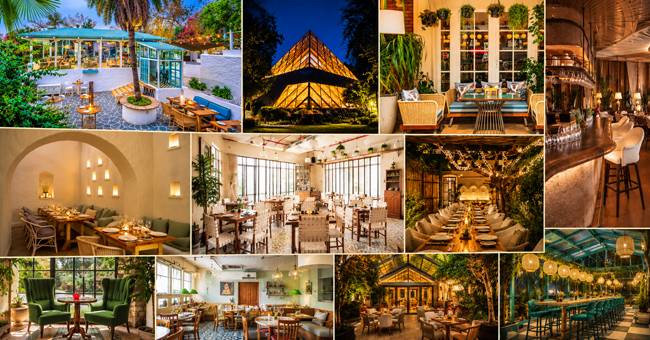
The current nomination presented to the awards captures the breadth of the platform: 15+ distinct concepts, 40+ standalone locations and a presence across 8 Tier-1 metropolitan markets. The portfolio includes Olive Bar & Kitchen, Olive Beach, Olive Bistro and Bar, Olive Café & Bar, SodaBottleOpenerWala, Guppy, The Love Hotel, The Fatty Bao, Monkey Bar, The Grammar Room, The Hoppery, Olly and Call Me Sofia, among others.
| Dimension | Olive Group Story |
| Distinct concepts | 15+ |
| Standalone locations | 40+ |
| Tier-1 metropolitan markets | 8 |
| Journey | 1990–2026 |
| Olive Bar & Kitchen | 25 years in 2026 |
The interesting part is the variety. Olive could be premium dining. Monkey Bar could be a gastropub. Guppy could take contemporary Japanese dining in another direction. SodaBottleOpenerWala could revive the Irani café culture of Bombay. The Grammar Room could turn coffee, food and language into an all-day café proposition, while The Fatty Bao could bring Asian gastro-bar culture into the portfolio.
The business was therefore not built around one consumer or one occasion. It was built around the belief that different audiences could be given different worlds.
Sabina: The Other Half of the Olive Experience
This is where Sabina’s role becomes central to AD’s journey. Olive’s own management profile describes her as the group’s Director of Design and the creative mind behind the distinctive design of its restaurants. She works hands-on with architects, draws inspiration from travel and continually evolves the group’s aesthetic language.
Her contribution goes well beyond making restaurants attractive. She gives concepts their visual identity and thematic soul. When SodaBottleOpenerWala was created, for example, Sabina was tasked with recreating and preserving the fading charm of the Bombay Irani café. The objective was not simply to decorate a restaurant with retro furniture; it was to reconstruct a cultural memory.
At Olive itself, she has continually refreshed rather than simply preserved the brand. For its 17th anniversary, she worked with designer Shweta Kaushik to introduce a kitchen garden, a pickle bar where the chef could interact with customers, and a substantially refreshed bar and surrounding space while retaining the familiar boho-chic character.
That is a useful insight into the Singh philosophy: legacy is not treated as preservation. It is treated as something that must keep evolving.
And this is also why Sabina accepting AD’s award felt almost perfectly scripted—even though, of course, the script was written by a delayed flight. The trophy was meant for AD, but when it reached the stage, it was quite literally in one of the safest pairs of hands in the Olive story.
When Design Becomes Part of the Food Business
The more recent Olive concepts make this even clearer. In 2026, the group opened The Hood by Olive in Bengaluru, replacing the earlier Toast & Tonic space with a new concept inspired by neighbourhoods in Kyoto, Beirut and Florence.
The 80-seater was designed by Sabina Singh, with the interiors using maps, murals, warm textures, books, bespoke crockery and design cues to build a sense of place. The menu itself follows the same idea, interpreting culinary influences from those neighbourhoods rather than simply reproducing generic versions of Japanese, Italian or Lebanese cuisine.
And then there is Call Me Sofia, the low-ABV aperitivo bar introduced within Olive Bar & Kitchen in Khar in late 2025. Sabina designed the space, which occupies what was earlier a private dining room and has its own entrance through the restaurant.
These are not merely new outlets. They are new layers of experience within an existing hospitality ecosystem.
The Restaurant as a Laboratory
This may be the most important part of AD’s contribution. He has repeatedly used restaurants as laboratories for ideas. The award nomination describes Olive’s approach as a portfolio built around differentiated culinary and lifestyle formats, with continuous evolution of boutique spaces, premium dining, casual dining, bar and social formats, and experimentation with next-generation hospitality concepts.
His own history reinforces that. The Bowling Company was not another restaurant; Just Desserts was not conventional dining; Olive was not a hotel restaurant; SodaBottleOpenerWala was not simply a café; Monkey Bar was not a conventional bar; and Guppy was not a standard Japanese restaurant. Each was a point of view.
That is perhaps why the award title includes both “Modern Indian Dining” and “Creative Format Innovation.” The two are inseparable in AD’s story.
The People Behind the Brands
Yet there is another part of the award citation that deserves greater attention: people. The PepsiCo–IMAGES citation specifically recognises AD for nurturing chefs and hospitality talent and providing a platform for people who went on to become important industry professionals. Olive’s own profile similarly emphasises AD’s long-standing relationships with partners, protégés and chefs, and the platform he created for people who went on to become part of the industry’s next generation.
That may be one of the hardest achievements to quantify. A restaurant’s revenue can be measured, outlets can be counted, and concepts can be listed. But the number of careers influenced by a hospitality entrepreneur is much harder to put into a spreadsheet. And that is precisely why a Lifetime Contribution award carries a different meaning from an expansion award.
A Marriage of Two Creative Disciplines
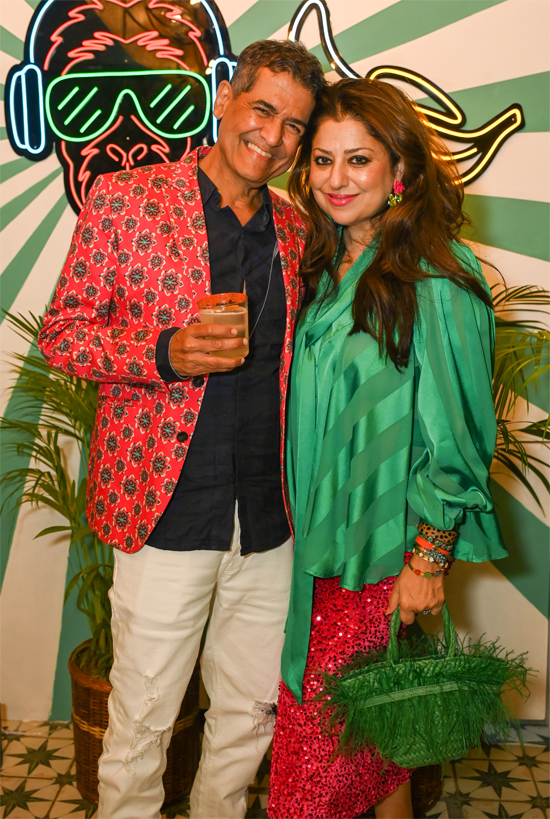
The AD and Sabina story is also unusual because their roles have evolved into complementary creative disciplines. AD’s strength has been ideas, consumer insight, concepts, food and hospitality business, while Sabina’s has been design, atmosphere, visual storytelling and the physical expression of those ideas.
A recent profile of the couple describes Sabina as shaping aesthetic decisions across the group—from staff uniforms and seasonal looks to new brands and makeovers. The same account says AD now largely steps away after the conceptual stage when it comes to design, allowing Sabina to drive the visual direction.
Their collaboration can be seen in the restaurants themselves: the white walls of Olive; the Bombay nostalgia of SodaBottleOpenerWala; the playful energy of Monkey Bar; the travel-inspired Serai; the contemporary Japanese cues of Guppy; and the global neighbourhood language of The Hood. Different restaurants, different stories—but a recognisable attention to how the consumer feels inside the space.
Why the Olive Model Has Lasted
The current award nomination summarises the business in five words: longevity, portfolio depth, format innovation, scale with identity and next-generation focus. Those five ideas explain the longevity better than any outlet number. The journey began with Just Desserts in 1990 and Olive in 2000; the portfolio now spans 15+ concepts rather than depending on one brand; the formats cover premium dining, casual dining, bars, cafés and social spaces; the group has reached 40+ standalone locations across 8 Tier-1 markets while retaining differentiated concepts; and it continues to experiment with new formats rather than treating established brands as finished products.
The group has continued to evolve even as the original Olive itself approaches and passes major milestones.
THE MOST IMPORTANT NUMBER MAY BE 36 YEARS
The obvious numbers in the Olive story are 15+, 40+ and 8. But there is another number worth considering: 36 years.
That is the span from Just Desserts in 1990 to the PepsiCo–IMAGES Food Service Awards in 2026. Within those 36 years, India’s restaurant industry itself has changed dramatically—from hotel-dominated dining to standalone restaurants, cafés, QSRs, gastropubs, experiential formats, specialty concepts, delivery and omnichannel consumption.
AD did not merely survive those transitions. He repeatedly created concepts for the next one.
And perhaps that is why his Lifetime Contribution award is best understood not as an award for having been around a long time, but for remaining creatively relevant for a very long time.
From Just Desserts to Call Me Sofia
There is a beautiful symmetry in the journey. In 1990, the young AD saw an opportunity in coffee, desserts and jazz. In 2000, Olive turned a restaurant into an experience. In the years that followed, the group experimented with Indian nostalgia, Asian dining, Japanese food, gastropubs, cafés, bars and social spaces. In 2025 came Call Me Sofia. In 2026 came The Hood by Olive.
The names and formats have changed. The consumer has changed. Mumbai has changed. India has changed. But the basic instinct appears remarkably consistent:
Find an interesting idea. Give it a distinctive world. Put good people behind it. And make the consumer want to stay a little longer.
That may be the most enduring contribution of AD Singh to India’s food business.
And perhaps, fittingly, when the award finally reached the stage at the PepsiCo–IMAGES Food Service Awards 2026, it was Sabina Singh who stepped forward to receive it. The award was for AD, but the trophy looked perfectly at home in Sabina’s hands. After all, she has spent much of the last three decades helping give AD’s ideas their walls, colours, textures, mood and personality.
So, for one evening, the man who created the ideas was represented by the woman who helped turn so many of them into places people wanted to enter, sit in, remember—and return to.
The Olive story has always been an AD-and-Sabina story.
A story of food and design. Of business and creativity. Of restaurants and people. And, above all, of an idea that began with Rs 50,000, coffee, desserts and jazz—and grew into a 36-year journey of making dining in India something to experience, not merely something to do.