


How hotels, cafés, quick-service restaurants and an evolving supplier ecosystem are shaping the next phase of India’s plant-based food industry.
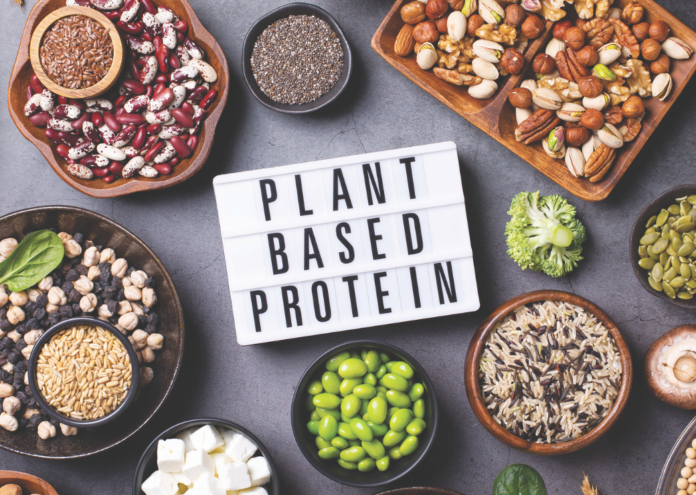
India’s plant-based food industry has evolved steadily over the past decade, expanding from a niche category centred around soya milk and tofu into a broader ecosystem spanning plant-based dairy, meat and protein alternatives. The overall plant-based food market was valued at ~`450 Cr in FY 2025 and is projected to reach ~`900 Cr by FY 2030, growing at a CAGR of 15%.
While retail, driven primarily by direct-to-consumer brands, e-commerce, and modern trade, continues to account for the majority of category sales, this demand remains concentrated among a narrow, largely urban consumer base. These are often health-conscious and diet-conscious buyers in a handful of metro cities, motivated by specific triggers such as protein intake, lactose intolerance, or a doctor-recommended dietary shift, rather than reflecting mainstream, everyday adoption. An equally important transformation, meanwhile, has been unfolding within India’s foodservice industry.
Hotels, restaurants, cafés, and quick-service chains are no longer simply acting as distribution channels for plant-based products.
For a growing number of brands, HoReCa has become the primary route to market in its own right; a space where manufacturers can refine products, demonstrate culinary performance, and build consumer familiarity on its own terms, not merely as a precursor to retail.
Building a Market One Kitchen at a Time
The earliest phase of India’s HoReCa plant-based ecosystem was characterised less by scale and more by experimentation. Consumer awareness remained limited, procurement networks were fragmented, and restaurants were understandably cautious about introducing unfamiliar ingredients to their menus. Consequently, the first generation of suppliers invested considerable effort in building relationships with chefs rather than consumers.
Instead of pursuing supermarket shelf space, these companies positioned HoReCa as their primary route to market, recognising that a successful restaurant dish could often generate greater consumer confidence than a retail product sitting on a shelf. However, introducing these ingredients was not without economic hurdles. Plant-based alternatives typically command a price premium over conventional counterparts. Early HoReCa partners had to strategically engineer menus to manage these unit economics—either by absorbing initial margins to drive trials or by positioning these dishes as premium offerings for price-elastic diners.
Among the earliest pioneers were GoodDot, Blue Tribe Foods, and Wakao Foods, each taking slightly different approaches to foodservice:
- GoodDot focused on building relationships across luxury hotels, casual dining chains, and institutional foodservice, establishing partnerships with hospitality groups such as The Leela, Marriott, Taj Group, Radisson, and Novotel, while also supplying restaurant brands including Barbeque Nation, Applebee’s, and Domino’s.
- Blue Tribe Foods expanded this approach further, supplying plant-based products to more than 200 hotels and restaurants, including ITC Hotels, The Oberoi Group, Hyatt Hotels, Fairmont, and Four Seasons, alongside restaurant groups such as Impresario (Social, Smoke House Deli) and Travel Food Services across major airports.
- Wakao Foods, specialising in jackfruit-based alternatives, adopted a broader foodservice strategy, supplying over 100 hotel, restaurant, café, and cloud-kitchen partners across more than 22 cities, including Taj Hotels, Grand Hyatt, Radisson Blu, Burma Burma, and Burger Factory.
While these partnerships differed in scale, they shared a common objective: demonstrating that plant-based foods could perform consistently in commercial kitchens while delivering an experience that consumers would willingly pay for.
Plant-Based Dairy Followed a Different Path
Unlike meat alternatives, plant-based dairy entered HoReCa with considerably lower operational friction. A café introducing oat, almond, or millet milk does not need to redesign recipes, retrain chefs, or alter kitchen workflows. Instead, plant-based milk functions as a direct ingredient substitution, making it significantly easier to integrate into existing beverage menus.
This difference is evident in how the category has evolved. Rather than focusing on chef collaborations, dairy-focused brands concentrated on café chains and breakfast formats where consumer trial could happen naturally.
Notable examples include:
- Better Bet (formerly Alt Foods), whose millet milk was initially introduced through Blue Tokai Coffee Roasters during a Veganuary campaign before subsequently being rolled out across the café chain’s outlets nationally.
- Epigamia, which expanded beyond Greek yoghurt into plant-based milk and yoghurt, reflecting growing interest in dairy alternatives.
- Sofit (Hershey India), which continued expanding its soy and almond beverage portfolio.
- Dancing Cow and several emerging dairy-alternative brands, which have increasingly targeted cafés, hotels, and premium retail simultaneously.
Perhaps more importantly, these partnerships demonstrated that consumers do not necessarily need to seek out plant-based products deliberately. Sometimes, familiarity develops simply because a trusted café chooses a different ingredient. Retail asks consumers to trust a packet. HoReCa asks them to trust a cup of coffee.
Behind Every Successful Menu is an Invisible Supply Chain
While consumer-facing brands attracted most of the industry’s attention, a quieter transformation was taking place behind the scenes. As restaurants expanded plant-based offerings, the industry’s needs evolved from product innovation to manufacturing consistency. Hotels and restaurant chains require suppliers capable of delivering identical taste, texture, shelf life, and cooking performance across hundreds of kitchens.
Achieving this consistency requires a sophisticated ecosystem extending well beyond consumer brands. Companies such as Symega Food Ingredients, ADM India, AAK Kamani, Kerry, BVeg Foods (leveraging Bühler’s extrusion technology), Chatha Foods, and Zippy Edibles have increasingly become integral to this evolution. They provide specialised ingredient systems, flavour solutions, extrusion technology, co-manufacturing, and large-scale processing capabilities.
Crucially, for commercial kitchens, inventory management and wastage are top priorities. Recent innovations in extrusion technology and advanced packaging have significantly improved the shelf life and frozen-storage capabilities of these alternative proteins, alleviating operational risks for restaurants. Although these businesses remain largely invisible to consumers, they represent one of the industry’s most significant structural developments, enabling plant-based products to transition from chef-led experimentation to commercially scalable foodservice solutions.
When Corporates Began Building for Commercial Kitchens
By 2023, the composition of India’s HoReCa supplier ecosystem had begun to change. Rather than startups alone driving innovation, established FMCG companies and national restaurant chains started developing products specifically for commercial kitchens.
This signals growing confidence in the category, often driven not just by consumer demand, but also by global corporate Environmental, Social, and Governance (ESG) mandates aimed at reducing supply chain carbon footprints.
Recent developments include:
- Nestlé India introduced a dedicated plant-based portfolio under MAGGI Professional, piloting plant-based patties and mince through SOCIAL and BOSS Burger across 80+ outlets in Delhi NCR, Mumbai, Bengaluru, Pune, and Chandigarh, demonstrating a restaurant-first approach to product validation.
- Tata Starbucks announced the introduction of an all-new vegan product lineup in India, developed in partnership with Imagine Meats. Starbucks added three food products: a Vegan Sausage Croissant Roll, a Vegan Hummus Kebab Wrap, and a Vegan Croissant Bun.
- McDonald’s India, in collaboration with CSIR-CFTRI and Symega, launched the Protein Plus Slice in 2025—a soy- and pea-based protein slice that could be added to any burger without changing existing kitchen operations. Rolled out via Swiggy across 58 cities, the product sold 32,000+ slices within the first 24 hours, reflecting a shift towards positioning plant-based ingredients around protein enrichment rather than purely vegan consumption.
- Plantaway (Graviss Group) has expanded its HoReCa-focused portfolio comprising plant-based cheese, butter, ready-to-cook meat alternatives, and other foodservice solutions, reflecting the growing focus on products designed specifically for commercial kitchen applications rather than retail shelves.
Unlike the first generation of suppliers, these companies entered with established manufacturing capabilities, national distribution networks, and dedicated foodservice product development teams. Their participation reflects a broader shift in how the industry views plant-based food: not simply as a niche consumer category, but as an increasingly relevant ingredient platform for organised foodservice.
HoReCa: The Bridge Between Innovation and Mainstream Adoption
Although often discussed as a single market, HoReCa is far from homogeneous, with each format driving demand for different plant-based categories. Luxury hotels continue to use plant-based foods to differentiate menus and cater to evolving dietary preferences, while premium and casual dining restaurants increasingly collaborate with suppliers to develop customised recipes.
Cafés have emerged as one of the strongest demand drivers for plant-based dairy alternatives, whereas quick-service restaurants represent the next frontier, requiring suppliers capable of delivering consistent quality, operational simplicity, and national-scale supply. This diversity highlights the growing sophistication of India’s plant-based supplier ecosystem.
As foodservice adoption expands beyond premium hospitality into organised restaurant chains, supplier competitiveness will increasingly depend not only on product innovation but also on manufacturing scale, supply reliability, shelf life, and foodservice-oriented product development. Success will be determined as much by execution as by innovation.
While retail is expected to remain the largest sales channel for plant-based foods, HoReCa’s real contribution lies in reaching the consumers retail cannot: diners who are not actively seeking out a plant-based product but encounter one anyway, on a hotel menu, in a café’s default milk, or inside a quick-service chain’s protein-fortified burger.
This kind of incidental exposure is what allows the category to move beyond the narrow, health-conscious urban base currently driving retail sales, towards a broader, more mainstream audience—one that tries plant-based food not because it went looking for it, but because a restaurant, café, or QSR chain already made that choice easy.
The brands and suppliers that emerge as long-term leaders are therefore likely to be those that combine product innovation with scalable foodservice capabilities, using HoReCa not simply as a proving ground, but as the channel best positioned to carry plant-based food from a niche, health-driven segment into everyday mainstream consumption.