


India’s “kidult” economy has turned into a high-value consumption force, reshaping how brands think about fandom, collectibles, and nostalgia. What started as a niche cohort now contributes 28% of global toy purchases, up 2.5 points from 2022, driven by emotional resonance, franchise loyalty, and a growing appetite for collectible-grade products. Their rising influence is prompting brands to rethink segmentation, invest in franchise IPs, and experiment with new touchpoints that appeal to older kids, teens, and adults who remain emotionally connected to fictional universes.
Drawing on this momentum, Kinder Joy executed one of the most deliberate pivots in the category: repositioning its surprise-based DNA to appeal not just to young children, but to older kids, teens, and fandom-driven adults. Its latest activation at Delhi Comic Con 2025 signals how the brand intends to participate in this fast-growing cultural economy.
Sharper Segmentation: The Pivot to Fandom-Driven Toys
The brand’s shift is rooted in a core challenge: retaining relevance as children age out of traditional toy formats. The earlier drop-off typically occurred when kids discovered more sophisticated entertainment ecosystems and gravitated toward characters they followed in films, gaming, and streaming.
Zoher Kapuswala, Marketing Head, Ferrero India Subcontinent, explained the transition clearly: “Suddenly, they are into different sorts of fandoms. They will be into DC, they will be into Disney, they will be into Harry Potter. Those fandoms are what excite them.”
Instead of accepting attrition as inevitable, the team introduced a dual-track portfolio:
- A foundational range for early childhood joy and discovery.
- A fandom-driven tier built around franchise IPs, where the toy shifts from ‘play object’ to ‘collectible artifact.’
By partnering with Funko, a category authority in global collectible design, the brand ensured the new range carried the authenticity and detailing the older cohort expects. The toys function as micro-collectibles, aligning with how older kids evaluate value: by narrative relevance, character identity and display appeal.
The Harry Potter Wave: Proof of Concept
As the brand’s first major foray into fandom-centric licensing, the Harry Potter launch became the crucial test case for the new segmentation model. The 360-degree campaign combined mass media with digital-first storytelling, backed by e-commerce interventions and high-visibility POSM across retail. This created an ecosystem where both casual buyers and dedicated fans could engage with the collection.
The response exceeded expectations. “A wave,” as Kapuswala termed it, emerged not only from children but from teens, collectors and adults with deep emotional ties to the franchise. The range behaved less like a children’s SKU and more like an accessible entry point into the Wizarding World for fans across age groups. That outcome demonstrated the commercial viability of fandom-led extensions and reinforced the brand’s commitment to an ongoing sequence of licensed collaborations, where each aims to maintain cultural relevance with older cohorts.
DC at Comic Con: Entering the Heart of Fandom

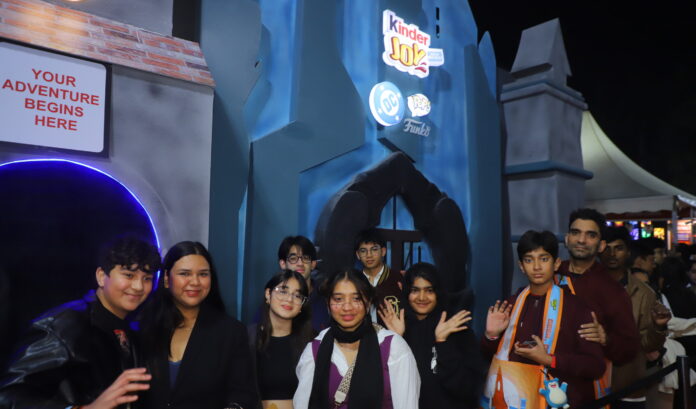
Showing up at Comic Con 2025 signalled a clear shift: the brand was no longer speaking to fandom from the outside but stepping directly into its cultural arena. Surrounded by comic enthusiasts, cosplayers and collectors, the activation allowed the team to observe genuine, unprompted reactions from older cohorts, which is precisely the leading demographic driving kidult spending globally.
“It was important for us to understand whether we belonged in that ecosystem,” Kapuswala said. “Comic Con helped validate that older fandoms are not only receptive but excited when we get the storytelling right.” The engagement demonstrated that the brand could operate credibly within fandom-heavy spaces and appeal to consumers far beyond its traditional base.
Experiential Momentum: How Offline Worlds Fuel Online Fandom
The DC activation added a new dimension to Kinder Joy’s fandom strategy by moving beyond digital-first campaigns into high-touch experiential marketing. While the Harry Potter rollout relied heavily on broadcast, retail integration and online storytelling, the Comic Con showcase demonstrated how physical experiences can ignite disproportionately large digital outcomes.
Kapuswala underscored this shift, noting, “Today, social media being so prevalent, events like these create buzz far beyond the people visiting the zone.” The experiential zone became a content engine: cosplayers creating reels, collectors sharing close-ups of figurines, and families posting moments of discovery. These are the activities turning an on-ground activation into days of online conversation.
For the brand, the platform delivered four critical advantages:
- FOMO-driven discovery, pulling visitors organically into the Gothic City-themed zone
- High-volume UGC, generated by fans eager to document the immersive touchpoints
- Relevance among teen and adult fandoms, who increasingly influence toy trends
- Reinforcement of emotional equity, ensuring the brand remains synonymous with playful joy
Surprise as a Strategic Anchor
What ties these fandom-led campaigns together is not deviation from the core proposition but a deeper expression of it. Kinder Joy is modernising its foundational promise for a multi-age audience. As Kapuswala put it, “Surprises, that’s what we stand for. It brings a smile not only to the kid, but even to the parents.”
In the new playbook, that surprise manifests through:
- Collectible-grade figurines tied to beloved franchises
- Immersive experiences that merge physical play with digital amplification
- Partnerships that align the brand with culturally powerful universes
The result is a sharper, more contemporary interpretation of Kinder Joy’s DNA, one that resonates as strongly with kidults and franchise loyalists as it does with the brand’s original audience.
The Road Ahead: A Long Pipeline of Fandom Collaborations
With Harry Potter and DC validating the model, Kinder Joy is now charting a more ambitious licensing roadmap. Kapuswala offered a measured hint, “You can really look forward to some more exciting things to come.”
For a brand built on surprise, the next phase is about scaling that emotion across demographics. By fusing fandom, nostalgia and immersive storytelling, Kinder Joy is positioning itself squarely within India’s expanding kidult economy—where collectibility and cultural affinity increasingly shape purchasing decisions.