

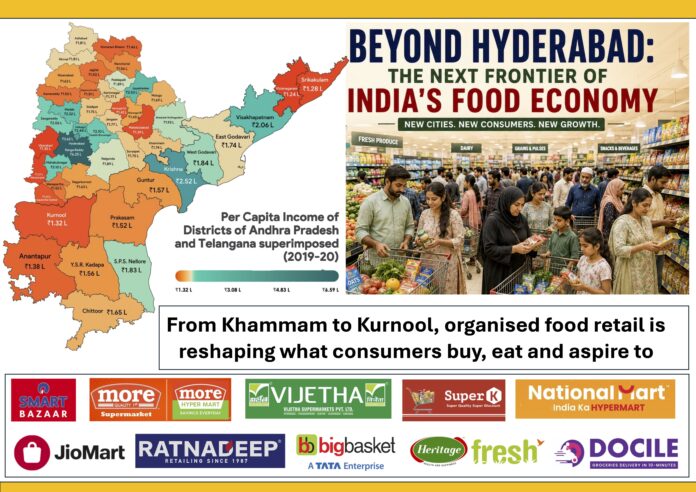

For years, the story of organised food and grocery retail in South India revolved around Hyderabad. The city pioneered the supermarket culture in the Telugu-speaking states, introducing consumers to modern retail formats, premium food products, international brands and organised shopping experiences. Today, however, the next chapter of that story is being written far beyond the state capital.
Cities such as Khammam, Warangal, Karimnagar, Nizamabad and Kurnool are rapidly emerging as the new growth engines of organised food retail. Once regarded primarily as agricultural and trading centres, these cities are now attracting significant investments from national, regional and local retailers eager to tap into a new generation of affluent and aspirational consumers.
The recent opening of National Mart’s 30,000 sq. ft. hypermarket and a new Vijetha Supermarkets store in Khammam within just 24 hours is among the clearest signs of this shift. But the story extends far beyond a couple of store launches. It reflects a broader transformation underway across Telangana and Andhra Pradesh—one that is reshaping consumption patterns, food choices and lifestyles.
The Rise of the Telugu Consumer
The emergence of these cities as retail hotspots is rooted in a powerful economic transformation. Across Telangana and Andhra Pradesh, rising agricultural incomes, government employment, infrastructure investments, real-estate development and overseas remittances have created a sizeable middle class with growing spending power.
Khammam benefits from thriving chilli, cotton and paddy cultivation. Warangal has long been a major centre for cotton and rice production. Karimnagar’s economy is supported by agriculture, granite and education. Nizamabad draws strength from rice and turmeric cultivation, while Kurnool is a major producer of groundnuts, chilli and horticulture crops. Adding to this prosperity is the significant flow of remittances from families with members working in the United States, the Gulf countries, Australia and Europe. The result is a consumer base that is increasingly aspirational, digitally connected and eager to embrace modern lifestyles.
For retailers, these cities offer a compelling combination of rising incomes, lower operating costs and relatively low organised retail penetration compared to metros. Organised food and grocery retail still accounts for less than 10-15% of total grocery sales in many Tier-II and Tier-III markets across Telangana and Andhra Pradesh, compared to substantially higher penetration levels in Hyderabad. This leaves a significant runway for growth as consumers increasingly migrate from traditional trade to modern retail formats.
Retailers Follow the Consumption Shift
Organised retailers have been quick to recognise the opportunity. Reliance Retail, India’s largest retailer with annual revenues exceeding Rs. 3.3 lakh crore, continues to expand its grocery footprint through Reliance Smart, Smart Bazaar and JioMart formats. DMart, one of India’s most profitable retailers with revenues of more than Rs. 60,000 crore, has steadily expanded into emerging cities where value-conscious consumers are embracing organised retail.
Alongside national giants, regional players are building strong positions in the Telugu-speaking markets. Vijetha Supermarkets today operates more than 100 stores across Telangana and Andhra Pradesh. Ratnadeep Retail has grown into one of South India’s largest supermarket chains with more than 180 stores across Telangana, Andhra Pradesh and Karnataka. Heritage Fresh, More Retail, National Mart and several local operators are also aggressively expanding into district headquarters and emerging urban centres.
What makes these markets particularly attractive is that organised food retail remains significantly underpenetrated compared to Hyderabad, Bengaluru or Chennai, leaving substantial room for growth.
A New Generation of Retailers Is Expanding the Market
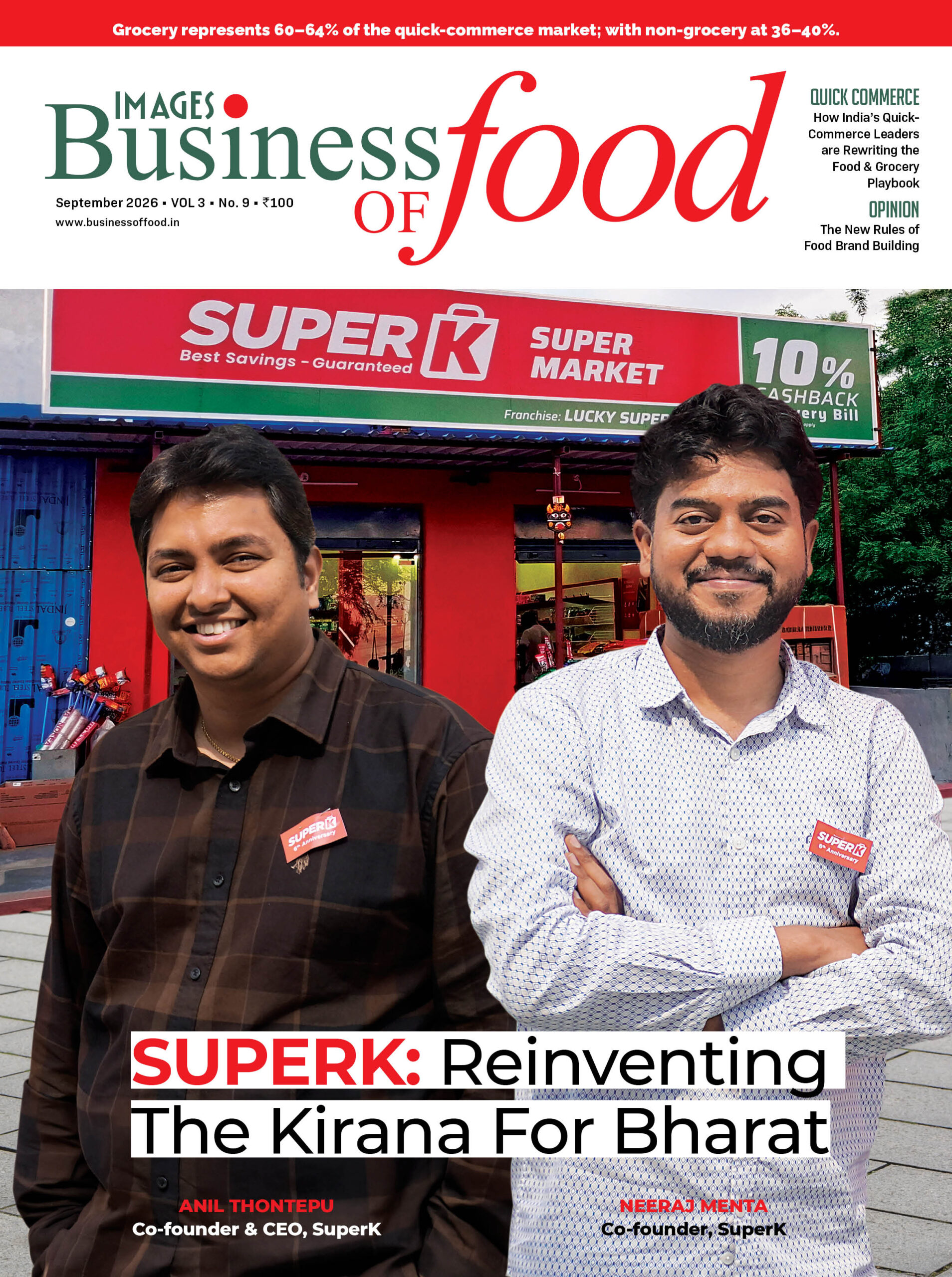
What makes the current wave of retail expansion different is that it is no longer being driven solely by large corporate chains. A new generation of regional and technology-led retailers is taking organised food retail deeper into smaller towns across Telangana and Andhra Pradesh. Among the most notable examples is SuperK, founded by former Flipkart executive Neeraj Menta and former PhonePe executive Anil Thontepu. The company has built one of India’s most successful small-town grocery retail models by focusing exclusively on markets that large organised retailers often overlook.
From a revenue base of approximately Rs. 19 crore, SuperK reportedly grew to Rs. 84 crore within just two years and today operates more than 130 stores across over 80 towns in Andhra Pradesh and Telangana. Backed by more than Rs. 100 crore in funding, the company is targeting communities where populations are often below two lakh and where organised retail penetration remains low. Its model combines the trust of local kirana stores with the efficiencies of modern retail. Local entrepreneurs invest approximately Rs. 12-15 lakh to convert neighbourhood stores into SuperK outlets while gaining access to centralised sourcing, technology, logistics, training and private-label products.
The company’s private labels, including SuperK, Triputi and Aha, are typically priced 15-20% below national brands, helping consumers access better value while improving retailer margins. According to the company, franchise stores often witness dramatic sales growth after joining the network, while its Gold Membership programme accounts for nearly 75% of sales. More importantly, SuperK demonstrates that the next phase of organised food retail growth in India may not come solely from large corporations. Increasingly, it is being driven by entrepreneurs who understand the unique needs, aspirations and purchasing power of consumers in smaller towns.
DocileKart represents another emerging model. The omnichannel retailer has built a network of more than 250 franchise-led grocery and quick-delivery outlets across the Telugu-speaking states, targeting consumers who increasingly expect both neighbourhood convenience and digital ordering capabilities.
Together, these retailers are creating organised retail access in markets that were previously dependent almost entirely on traditional kirana stores.
The Corporate Giants Move Deeper
The larger national players are pursuing equally aggressive strategies.
DMart has steadily expanded its footprint across Telangana and Andhra Pradesh through its highly successful “Everyday Low Cost, Everyday Low Price” model. The retailer has established stores in cities including Warangal, Karimnagar, Khammam, Nizamabad, Kurnool, Nellore, Kakinada, Eluru and Anantapur, often becoming the dominant food retail destination in these markets.
Reliance Retail has adopted an even broader approach. Through Reliance Smart, Smart Bazaar, JioMart and its emerging quick-commerce ecosystem, the company is creating a multi-format presence across the region. Reliance is increasingly entering smaller district headquarters and agricultural growth centres, bringing hypermarket-style retail experiences to consumers who previously travelled to larger cities for organised shopping.
The result is an increasingly competitive marketplace where national chains, regional retailers and local entrepreneurs are all competing for a share of the rapidly expanding food and grocery market.
Khammam: A Snapshot of the Transformation
Few cities illustrate the shift better than Khammam. Within a relatively short period, the city has emerged as one of Telangana’s fastest-growing organised retail destinations. Alongside the newly opened National Mart and Vijetha Supermarkets stores, consumers today have access to DMart, Maangalya Shopping Mall, GV Mall, Chennai Shopping Mall, CMR Shopping Mall, KLM Fashion Mall, South India Shopping Mall, Trends, Zudio and several other organised retail formats.
The concentration of retail development along the Wyra Road corridor has created a modern shopping ecosystem that would have been unimaginable a decade ago. What is happening in Khammam is increasingly visible in Warangal, Karimnagar, Nizamabad and Kurnool as well, where retailers are competing to secure prime locations and establish an early presence in markets expected to drive future growth.
Changing the Food Basket
The most significant impact of organised food retail is not the stores themselves but the transformation of consumer behaviour. A decade ago, grocery shopping in these cities was dominated by traditional kirana stores and local markets. Household purchases largely revolved around staples such as rice, pulses, edible oils, spices and locally produced snacks. Today’s shopping baskets tell a very different story.
Consumers are increasingly purchasing breakfast cereals, premium dry fruits, health foods, protein products, imported chocolates, international sauces, ready-to-cook meals, frozen foods, gourmet ingredients and premium packaged foods. Products that were once confined to supermarket shelves in Hyderabad are now readily available in Khammam, Warangal, Karimnagar, Nizamabad and Kurnool. Retailers report growing demand for categories such as healthy snacks, millet-based foods, plant-based beverages, frozen foods, premium bakery products, ready-to-eat meals and convenience-oriented meal solutions. The modern grocery basket is becoming more diverse, more experimental and more premium.
Bringing India and the World to Emerging Cities
Organised retail is also serving as a cultural bridge. Consumers in these cities can now access foods and ingredients from across India and around the world. Punjabi gravies, Gujarati snacks, Bengali sweets, Kerala banana chips, North Indian frozen foods, Italian pasta, Mexican condiments, Korean noodles, Japanese seasonings, international chocolates, gourmet cheeses and imported breakfast cereals are increasingly becoming part of everyday retail assortments.
This expansion of choice is exposing consumers to cuisines and flavours that were once difficult to access outside major metros. Social media has accelerated the trend. Consumers discover products through Instagram, YouTube, food influencers and OTT content and increasingly expect local retailers to stock them. For younger consumers in particular, supermarkets have become destinations for discovery, experimentation and lifestyle exploration.
The Battle for the Telugu Consumer
The competition is no longer simply about opening more stores. Retailers are targeting different consumer segments through distinct operating models.
DMart continues to dominate the value-conscious family shopper through its low-price positioning and large-format stores.
Ratnadeep Retail, which now operates more than 180 stores across South India, is pursuing a markedly different strategy. Through formats such as Ratnadeep Supermarket, Ratnadeep Select and Ratnadeep Express, the retailer is focusing on affluent consumers in high-growth urban clusters and emerging premium neighbourhoods. Rather than entering every small town, Ratnadeep is selectively targeting high-income catchments, industrial hubs and rapidly urbanising residential corridors.
Meanwhile, SuperK is penetrating deep into underserved small towns, while omnichannel operators such as DocileKart are combining physical stores with digital convenience.
At the same time, digital grocery platforms are extending their reach into cities such as Rajahmundry, Kakinada, Tirupati and Warangal. Tata-owned BigBasket has expanded its Fresho retail network and delivery operations across several emerging markets, while quick-commerce players such as Blinkit and Reliance’s own rapid-delivery initiatives are beginning to establish fulfilment networks beyond the largest cities. The convergence of supermarkets, hypermarkets, franchise chains, digital commerce and quick commerce is creating a retail ecosystem unlike anything these markets have experienced before.
From Necessity to Lifestyle
The evolution of organised food retail is also changing the way consumers perceive food. Shopping is no longer merely about replenishing household essentials. Consumers are increasingly seeking convenience, health, premium experiences and product discovery. Supermarkets are introducing shoppers to healthier eating habits, wellness-focused products, gourmet cooking ingredients and global cuisines. For many families, a visit to a hypermarket or supermarket has become a weekend activity comparable to visiting a shopping mall or dining out.
As organised retail expands, expectations around quality, assortment, packaging and shopping experience continue to rise. This shift is gradually narrowing the gap between consumption behaviour in Hyderabad and that in emerging cities across Telangana and Andhra Pradesh.
The Next Frontier of India’s Food Economy
For decades, Hyderabad served as the gateway for organised retail growth in the Telugu-speaking states. The next phase of expansion, however, is likely to be driven by cities such as Khammam, Warangal, Karimnagar, Nizamabad and Kurnool. These markets combine rising prosperity, improving infrastructure, strong agricultural economies and increasingly aspirational consumers. They represent one of the most compelling growth opportunities for food retailers, FMCG companies and consumer brands in India today.
The implications go far beyond retail. Organised food retail is influencing what people cook, what they eat, what they aspire to buy and how they engage with food. It is introducing new flavours, new cuisines and new lifestyles to millions of consumers. As retailers deepen their presence across Telangana and Andhra Pradesh, they are not merely expanding store networks. They are helping shape the next chapter of India’s food economy – one in which the future of consumption is increasingly being written beyond Hyderabad and beyond the metros.