

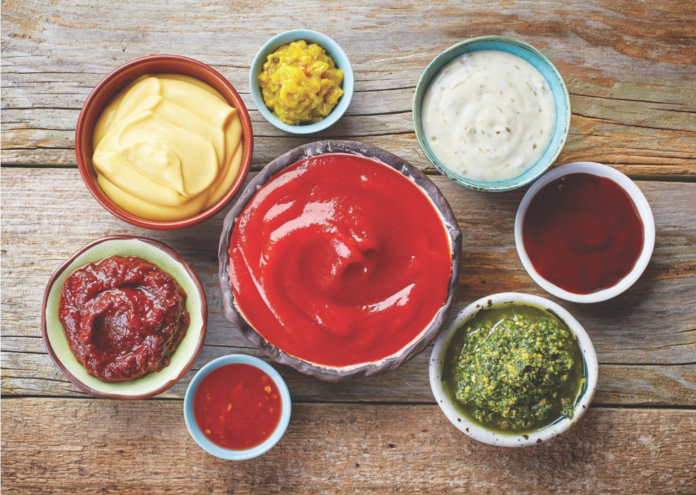

Restaurants, television, and now K-pop turned a homemade habit into a fast-growing retail shelf.
India’s sauces, dips and spreads market, spanning ketchup, table sauces, cooking sauces, savoury spreads and dips, was valued at `10,000-11,000 crore in FY 2025 and is projected to grow at a CAGR of 12-13% to reach `20,000 crore by FY 2030. Behind these numbers sits a less obvious story. India has always been a sauce country. It simply never needed to buy one.
Every region grinds its own chutney, spice powder (podi) or crushed chilli-garlic chutney (thecha), and Indian households remain deeply invested in home cooking, even as they increasingly look for convenience that does not compromise on taste.
For decades, that homemade tradition kept packaged sauces on the margins of the Indian plate. What changed was not the love of cooking, but the source of the flavours people wanted to cook with. Restaurants introduced them, television made them aspirational, the pandemic brought them home, and a new generation is now pulling them in from Seoul and Tokyo as easily as from Kolhapur and Agra.
Where It Started: A Treat, Not an Ingredient
Before 2005, the bottle on the Indian table held one thing: ketchup. In joint-family kitchens where chutneys and pickles were ground fresh on the grinding stone (silbatta), packaged sauce was a treat for children rather than a cooking ingredient. Kissan and Maggi built the category by making ketchup the hero of the school lunchbox (tiffin) and the evening snack, while Tops built a strong base across North India. The Indian palate decided early who would win. Heinz, the world’s best-known ketchup, struggled for years because its sweeter, milder profile did not suit Indian tastes. Beyond ketchup, the category barely existed. When Dr. Oetker entered India, mayonnaise was one-tenth the size of ketchup.
The QSR Classroom (2005–2010)
The first real shift began outside the home. As quick service restaurants (QSRs) such as McDonald’s, Domino’s, KFC and Subway expanded across metros, nuclear and dual-income households had their first taste of mayonnaise, peri peri and pizza sauce. Much of this flavour was built by Indian suppliers working behind the counter. Cremica, which has supplied McDonald’s India since 1996, still earns the majority of its revenue from servicing hotels, restaurants and caterers.
What QSRs created was familiarity. Consumers who had eaten a sandwich with mayonnaise at a mall wanted the same at home, and brands followed them to the retail shelf. Dr Oetker acquired FunFoods in 2008, when its turnover was `28 crore, and Del Monte entered with a range of ketchup, mayonnaise and Italian products. Restaurants built the taste; retail simply had to sell the bottle from the shelves.
From TV Screen to Kitchen Shelf (2010–2020)
The next decade turned familiarity into experimentation. Cooking shows such as MasterChef, along with food bloggers and recipe channels, made international cooking aspirational. Pizza, pasta and white sauces, salad dressings and dips moved from restaurant menus to home kitchens.
Food Service Restaurants played their part here too. Once consumers grew used to the first set of flavours, chains began experimenting with new sauces and dips to keep their menus exciting, and many of those flavours, from chipotle and barbecue to Indianised variants, later found their way into supermarket aisles.
The decade’s biggest lesson was that Western formats scaled only once they offered Indianised products. Dr Oetker’s turning point came with eggless, vegetarian mayonnaise in 2016, a product it sells in no other country, and FunFoods grew to around `200 crore by FY 2018, holding a majority share of the mayonnaise market. Veeba, which began as a supplier to QSRs, brought those same sauces to retail. This was also the decade Chinese sauces became an Indian staple, with Ching’s Secret creating an entirely new category, Schezwan Chutney, by building Chinese flavour for Indian palates. Wingreens built the dips habit by sampling pesto with chips, opening the way for hummus and salsa.
The Restaurant Comes Home (Post Covid, 2020-2025)
The pandemic accelerated the shift. Restaurant closures during lockdowns removed consumers’ primary access point to these flavours, and households turned to retail shelves to recreate restaurant-style meals at home. Quick commerce, which scaled rapidly in this period, made the shift effortless. A jar of pizza sauce or a pack of Schezwan chutney could now reach the kitchen in minutes, often in the middle of a recipe. The channel has kept compounding since, with orders on quick commerce platforms more than doubling from FY 2024 to FY 2025. Sauces, dips and spreads stopped being occasional accompaniments and became everyday cooking aids.
The habit outlasted the lockdowns because it met a real need. India remains a cooking nation, but a growing share of urban, dual-income households is short on time. These consumers want the same restaurant flavour at home, with less preparation and no compromise on taste. Convenience food products grew at a CAGR of 16% in 5 years by FY 2025 and are expected to grow further, supporting the demand for easy-to-cook meals at home. New-age brands were built for exactly this consumer. MasterChow, launched in 2020 to make restaurant-style Asian food easy at home, grew from `10 crore in FY 2023 to over `27 crore in FY 2025. Established players scaled with it: Veeba grew from `885 crore in FY 2024 to `1,026 crore in FY 2025, and Capital Foods, the maker of Ching’s Secret, grew from `714 crore in FY 2023 to `811 crore in FY 2026.
Two Ends of the Shelf (2025 Onwards)
Today the category is growing in two directions at once, and both are driven by taste. At one end, brands are bottling India’s own flavours. Kissan, the brand that taught a generation to eat ketchup, has launched regional chutneys such as Chilli Peanut Thecha and Khatti-Meethi Imli Khajoor, with a coarse, hand-ground texture. Spice Story offers around 15 regional chutneys in pourable form, from sweet tamarind and dry ginger chutney (saunth) to Kolhapuri Jhatka. Naagin and Kaatil have built hot sauce and chilli oil brands on Indian chillies such as Bhut Jolokia, Sankeshwari and Kanthari, with Naagin serving over one million customers and Kaatil winning the UK’s Great Taste Award in 2024. Ching’s has added a Momo chutney, taking a street-food favourite into the bottle.
Migration is adding to this demand; cities such as Delhi NCR, Mumbai and Bengaluru draw many people from their hometowns for education and work. Living away from home, often without the time or the family kitchen to recreate familiar recipes, they miss the flavours they grew up with. Bottled regional chutneys now fill that gap. Kissan’s Teekhi Lehsun (spicy garlic) chutney and Dabur Hommade’s Rajasthan Ki Garlic Chutney and Dilli Ki Hari Chatpati Chutney bring a taste of home to a city kitchen, turning every hometown flavour into a potential product.
At the other end, global cuisines are arriving faster than ever, led by the Japanese and Korean cultural wave.
Korean is now the fourth most accessed language on Duolingo in India, Korean brands’ gross merchandise value on Nykaa grew 58% in a year, and nearly 10% of the 150 million-plus global fans of the Korean wave live in India. For Gen Z, this influence shows up on the plate as ramen bars, soup bowls, chopsticks and protein-led bowl meals, and it brings a new set of sauces with it. Korean food logged 4.7 million orders on Swiggy in 2025. Fiery Korean sauces such as Samyang’s Buldak, gochujang-based sauces, Korean- and Japanese-style mayonnaise, chilli oil, teriyaki and sesame dressings are becoming regular purchases.
Veeba offers a Korean-style mayonnaise, KFC has launched a Korean spicy mayo, MasterChow has added chilli oil, and global specialists are tailoring products for India, with Kikkoman developing a dark soy sauce for Indian kitchens and Lee Kum Kee expanding its Asian sauces. Western dips continue to grow alongside, with Wingreens expanding into hummus and international dips and Veeba offering Thousand Island and other dressings. Much of this experimentation is being driven by new-age channels such as quick commerce, which let brands put a new flavour in front of urban consumers within days, test it and read demand in real time. For consumers, a low-cost order delivered in minutes turns an unfamiliar flavour into a low-risk impulse buy. The result is a consumer who wants both: the taste of home and the taste of somewhere new.
What Will Shape the Next Shelf
Several forces will decide who leads the next phase of growth:
- Regional Taste Preference: Consumers want authentic local flavours rather than a generic “Indian” taste. Every region’s chutney, spice powder or chilli is a potential new product.
- Global Flavour Exploration: Social media, travel and the Japanese and Korean wave will keep widening the palate, pushing Korean, Japanese, Mexican and Middle Eastern sauces and dips into the mainstream.
- Health and Hygiene Awareness: Indian consumers are becoming more aware and considering food safety as a top priority and looking for clean labels. Proposed front-of-pack warning labels for foods high in fat, sugar or salt could push mayonnaise and ketchup makers toward low-fat, low-sugar and preservative-free variants.
- Convenience without Compromise: Cooking bases, pastes, chutneys and dips that cut preparation time while keeping a home-cooked feel will be the next growth pool.
- Affordability and Consolidation: The September 2025 GST reset moved mayonnaise and condiments into lower tax slabs, narrowing the gap between homemade and packaged. Large groups are moving in: Tata Consumer acquired Capital Foods at an enterprise value of `5,100 crore in 2024, Agro Tech Foods agreed to acquire Del Monte India in a share swap valued at over `1,300 crore in 2024, Adani Wilmar announced in 2025 to acquire an 80% stake in Tops for `603 crore, and Reliance relaunched SIL in December 2025 with ketchup priced from `1 a pack.
India’s sauce shelf was not built by convincing Indians to stop cooking. It was built by restaurants that introduced new flavours, television that made them aspirational, a pandemic that brought them home and a generation that now reaches for gochujang as easily as green chutney. The grinding stone and the squeeze bottle are no longer rivals. India will not stop making chutney at home. It will simply buy more of it.