


As diners seek familiar flavours in new formats, restaurants and food manufacturers are turning to India’s regional pantry for their next big condiment bet.
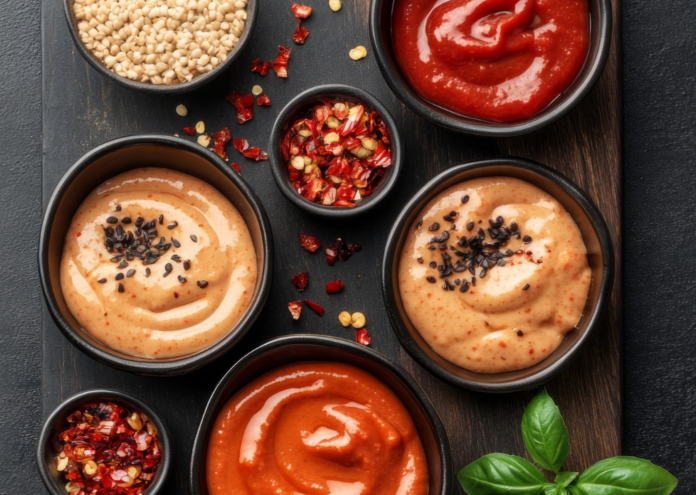
A spoonful of thecha, a swipe of green chutney or a fiery Schezwan dip could be the next way to make a familiar burger, wrap or plate of fries stand out. As India’s quick-service restaurants (QSRs), casual dining chains and cloud kitchens compete for customers’ attention, condiments are moving beyond the side of the plate to become part of the menu proposition itself. Regional Indian flavours offer operators a way to reinvent familiar dishes, introduce limited-period offerings and build distinctive flavour combinations without reinventing their kitchens.
The opportunity sits within a sizeable and expanding category. According to MarkNtel Advisors’ India Sauces, Dressings & Condiments Market Analysis, 2026, the market is valued at $4.81 billion in 2026, up from $4.37 billion in 2025, and is projected to reach $7.21 billion by 2032, growing at a CAGR of 6.97%. Meanwhile, a Nielsen-based estimate cited by The Economic Times in August 2026 puts India’s packaged chutney market at approximately Rs 350 crore, with Schezwan chutney accounting for around Rs 200 crore. The figures highlight two complementary opportunities: a large market for sauces and condiments, and scope to commercialise familiar Indian flavours in convenient, ready-to-use formats.
For foodservice operators, the appeal is as much commercial as culinary. A thecha mayonnaise, mint chutney dip, chilli-garlic sauce or cheese-based accompaniment can give an existing product a new identity, while additional dips and premium sauces create opportunities to upgrade meal combinations and increase order values. Suppliers such as Veeba, Cremica, Wingreens Farms and Ching’s Secret already operate across sauces, mayonnaise, dips and Indian-inspired flavour profiles. The question for restaurants is which flavours can move beyond experimentation to become repeat purchases across menus and outlets.
Yet, a condiment that excites customers must also make sense in the kitchen. Ingredient availability, sourcing costs, shelf life, portion sizes, recipe consistency and wastage can determine whether a new flavour becomes a profitable menu addition or an operational headache. As restaurants explore regional chutneys, Indian chillies and fusion sauces, the opportunity lies in finding flavours that retain their character at scale, work across multiple applications and deliver enough customer value to justify their cost. For QSRs and cloud kitchens, the next big flavour innovation may not require a new main course at all; it may begin with what goes on the side.
Regional Flavours Drive Sauce Innovation
For packaged condiment manufacturers, the opportunity lies in translating traditional flavours into ready-to-use products that appeal to younger consumers while retaining their regional identity. For QSRs and restaurant chains, sauces and dips are increasingly becoming tools for menu differentiation, allowing operators to introduce new flavour combinations, adapt to local preferences and encourage repeat purchases.
According to Akshay Bector, MD, Cremica Food Industries Ltd., India’s culinary diversity offers significant scope for innovation in the sauces and condiments category.
“India has a long history of great food flavours, which makes regional flavours attractive areas for innovation in the sauces and condiments segment. Consumers are experimenting with new tastes and would like to see products offering familiar Indian flavours in handy, ready-to-use formats,” he says.
He identifies green chilli, garlic, mint, tamarind and coriander, along with traditional chutneys, as flavours with potential across Indian snacks and everyday foods. He also sees an opportunity to develop products around regional flavours that appeal to younger consumers. However, translating these flavours into packaged products requires manufacturers to balance authenticity with commercial viability. “The challenge is in keeping the originality of the flavour while maintaining consistency and making products convenient, with an extended shelf life. For packaged food producers, developing products from such a diverse cuisine is a challenge,” Bector adds.
Adapting to Local Palates
The influence of regional tastes is also evident in how restaurant chains develop sauces and flavour combinations. Chinese Wok, operated by Lenexis Foodworks, builds its offerings around Indian consumers’ preference for bold flavours, particularly combinations of chilli, garlic and tanginess.
Chef Rahul Hajarnavis, Director – NPD and Culinary Innovation, Lenexis Foodworks (Chinese Wok), says the brand begins its product development process with an understanding of the Indian palate.
“We start with the Indian palate and work back to the wok. Indian diners want heat with depth: garlic, chilli and tang that hit hard, then settle. So our base sauces are built around Chilli Garlic, Schezwan, Honey Chilli and Manchurian, and we spend our time on balance. Each sauce has to pull its weight in noodles, rice, gravies and momos,” he says.
Customer preferences and repeat orders also influence the brand’s product development process. New flavour profiles are tested through pilot launches before being introduced across markets. Its Chilli Garlic sauce and Hot Desi Chilli gravy, Hajarnavis says, have emerged from this approach.
At Chinese Wok, regional preferences influence both core menu choices and flavour intensity. Hakka noodles are more popular in western and southern markets, while Chowmein leads in northern and eastern India. The brand accommodates these differences under a common national menu proposition rather than developing entirely separate menus for individual markets.
“The same logic applies to heat and tang. Desi chilli, garlic and tamarind-style sourness land very differently in Mumbai than in Delhi or Chennai, so we tune intensity by market instead of building a separate menu for each,” Hajarnavis says. The approach also extends to dips and accompaniments, which play an important role in the overall meal experience. Chinese Wok offers Schezwan, momo chutney, sweet chilli and mayonnaise, alongside Schezwan and cheese shake mixes.
“Indian guests treat a dip as part of the dish, and even a Chinese-format meal needs a chutney-style companion,” he adds.
Innovation Meets the Bottom Line
Beyond flavour development, the commercial viability of a new condiment depends on how efficiently it can be incorporated into restaurant operations. For QSR chains operating across multiple outlets, ingredient costs, sourcing, portion control and consistency can determine whether an experimental flavour makes it to the permanent menu.
Hajarnavis elucidates that Chinese Wok evaluates new flavours in actual kitchen conditions before introducing them across its network, ensuring that they can be prepared efficiently during peak hours. “We hold one rule: a new flavour only goes live if it works in the wok at peak hour, not just in the test kitchen. That means building from a common base of sauces and ingredients we already stock, so a new profile reuses what the kitchen already handles instead of adding a fresh supply chain,” he says.
The brand relies on standardised recipes, portioning and crew training to maintain consistency across outlets. It also evaluates menu performance through customer ratings and complaints, while periodically removing underperforming offerings.
“Consistency is an operations job. We standardise recipes, portion the sauces and train the crew to the same wok technique, and we judge ourselves on ratings and complaint volumes, not on how we describe the food,” Hajarnavis states.
He adds that menu rationalisation is equally important to controlling costs and kitchen complexity. “A menu that grows without pruning gets expensive and slow, and the guest feels it. Innovation earns its place when it adds appeal without adding wastage or kitchen steps,” he adds.
Regional Flavours Add a Local Touch
At Cafe Delhi Heights, the growing interest in Indian flavours is influencing how accompaniments complement the restaurant’s menu. Chef Ashish Singh, Head Chef, Cafe Delhi Heights, says consumers are increasingly receptive to seeing traditional flavours presented in new formats. “Indian flavours are an integral part of our food culture, and consumers love seeing them in exciting new formats. From spicy chutneys to tangy and smoky accompaniments, these flavours add familiarity and a sense of nostalgia while complementing the global dishes our guests enjoy,” Singh says.
However, introducing new flavour combinations also requires restaurants to maintain consistency across their kitchens. Standardised recipes, portion control and careful ingredient selection are important to preserving the taste and quality associated with Cafe Delhi Heights while ensuring operational efficiency. “I believe innovation must go hand in hand with consistency and quality. Standardised recipes, portion control and careful ingredient selection help us maintain the bold flavours and generous, satisfying experience that guests associate with Cafe Delhi Heights, while keeping operations efficient,” he adds.
Authenticity Meets Consistency
The growing interest in regional flavours is also influencing menu development in the hospitality segment, where chefs are incorporating local ingredients and traditional cooking techniques to create distinctive dining experiences.
Chef Palash Ghosh, Executive Chef, Taj Agra, says guests are increasingly seeking authentic local tastes and traditional recipes, prompting chefs to explore regional chutneys, dips and sauces as part of their menus.
“Guests today want to explore authentic local tastes and traditional recipes. We try to include regional chutneys, dips and sauces in our menus, using local ingredients and traditional cooking methods,” Ghosh says. For hotel kitchens, translating regional recipes into consistent offerings requires a balance between authenticity, ingredient quality and cost management. Ghosh says the kitchen focuses on sourcing fresh ingredients from reliable vendors and following standardised recipes to maintain consistency across preparations.
“We focus on maintaining authentic regional flavours while ensuring consistent quality and taste. We source fresh, good-quality ingredients from reliable vendors and follow standard recipes across our kitchens,” he notes.
Seasonal and locally available ingredients also help the hotel manage procurement costs without compromising on the quality of its offerings. “We aim to serve authentic regional food that tastes the same every time and gives guests a great dining experience,” Ghosh adds.
The Next Big Flavour
The next phase of sauce-led innovation is expected to move beyond heat and novelty towards layered flavours, regional ingredients and traditional culinary techniques presented in contemporary formats. Chefs are exploring fermentation, smoking, charring and modern emulsification to develop condiments that offer greater depth while retaining their connection to familiar Indian ingredients. Sustainability, ingredient transparency and seasonal sourcing are also becoming important considerations.
“One area I find particularly exciting is the evolution of traditional Indian condiments. Fermented chilli pastes, regional pickles, cultured ingredients, smoked chutneys and spice-forward dressings offer enormous potential,” says Chef Sanket More, Monarch Liberty Hospitality.
He points to fermentation as a technique that can introduce acidity, complexity and umami, while smoking and charring can add depth to ingredients such as tomatoes, chillies, aubergines and peppers. Regional ingredients such as kokum, tamarind, raw mango, curry leaves, mustard, sesame, coconut and local chillies also offer opportunities to create contemporary sauces, marinades, emulsions, glazes, dips and lighter dressings. The focus will increasingly shift towards balancing flavours rather than simply increasing their intensity.
Sustainability is another consideration shaping the development of accompaniments. Using vegetable trimmings to prepare stocks and bases, exploring overlooked ingredients and designing recipes that reduce wastage can help restaurants improve kitchen efficiency while encouraging creativity. Modern techniques such as controlled fermentation, precision temperature management and emulsification can further support new textures.
“A traditional chutney can have just as much potential for innovation as an elaborate contemporary sauce. The challenge is to understand the ingredient and know when to stop experimenting,” More adds.
Cremica Food Industries is focusing on developing sauces and condiments that address the changing requirements of QSRs and restaurant chains. Bector notes that the category offers opportunities across consumption occasions, ranging from everyday meals and snacks at home to the expanding menu formats of organised foodservice.
“Looking ahead, the greater opportunity is to develop products that offer flavour, convenience, consistent quality and versatility. With changing tastes and menu formats among consumers, the industry has an opportunity to explore regional Indian flavours, new flavour combinations and products formulated for specific foodservice applications,” he conveys.
He adds that operational efficiency, product consistency and dependable supply will remain central to building a sustainable business as the category evolves. Manufacturers will need to balance experimentation with commercial viability, ensuring new products can be produced efficiently.
“Our approach is to remain responsive to market needs, strengthen our understanding of emerging consumption trends and explore opportunities that align with our long-term business priorities. We see continued potential in this category,” he adds.
A similar approach is guiding Sanatanam’s exploration of traditional regional accompaniments. Girish Goel, Founder, Sanatanam, sees considerable scope in India’s repertoire of podis, thogayals and pickles, many of which have remained rooted in regional and household cooking traditions.
“Every region in India has its own podis, thogayals and pickles, and so does almost every household. There’s a lot there we haven’t brought to our menu yet, and we’re working on it,” Goel says.
However, the restaurant is taking a measured approach to introducing new preparations. Each dish undergoes multiple trials in the kitchen before making it to the menu, with the focus remaining on taste and quality rather than following emerging food trends.
“Right now we’re working on seasonal chutneys so the menu changes through the year like it would in a home kitchen. Whatever we introduce will be made in-house, with traditional methods and honest ingredients. For us, innovation means building on what tradition already knows,” he adds.
As restaurants look towards the next wave of condiment innovation, the opportunity may lie less in inventing entirely new flavours and more in rediscovering those that already exist in India’s kitchens. The real test, however, will be turning these familiar preparations into consistent, commercially viable offerings without stripping away the character that makes them distinctive. After all, the next standout sauce on a restaurant menu may not come from a new culinary invention, but from a recipe that has been perfected in Indian homes for generations.