

Monday, February 16, 2026

The Future of Frozen and Processed Foods in India

Must Read

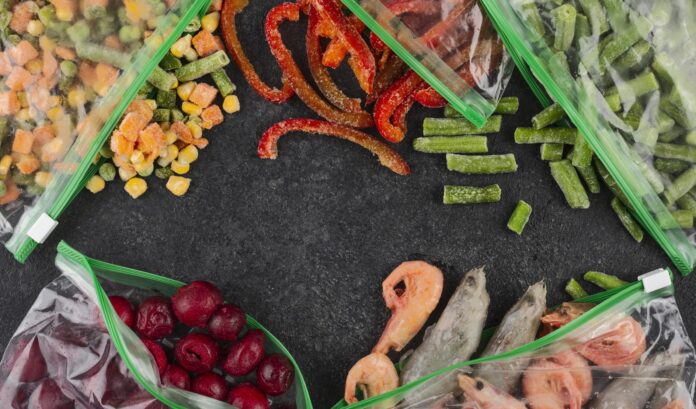
If you want to understand how India is changing, do not start with Parliament or Dalal Street. Start with the freezer section of a supermarket.

Ten years ago, it was a narrow strip stocked with peas, corn, and the occasional ice cream tub. Today, it is an entire corridor. Parathas. Idlis. Kebabs. Marinated chicken. Momos. Cut vegetables. Ready gravies. It tells a simple story: Indian kitchens are under pressure, and the market has stepped in.

Recent data pointed out that the ready-to-cook category grew 58% in 2024. That is not incremental growth. That is a behaviour shift. When a segment expands at that pace, it usually means consumers have crossed a mental barrier.

The Real Reason: Time

The freezer is winning because time is scarce. Urban India works longer hours. Commutes stretch. Households are smaller. In many families, both partners work. Cooking remains culturally important, but the format is evolving. A frozen paratha is not seen as a compromise if it saves 20 minutes on a weeknight.

The younger consumer does not carry the same suspicion toward frozen food that older generations once did. Hygiene, consistency, and brand reliability matter more than whether something was chopped that morning.

What has helped is localisation. This is not just about Western fast food anymore. Indian companies have filled freezer shelves with familiar flavours. Regional snacks, vegetarian appetisers, and traditional breads dominate. The product feels Indian. That reduces hesitation.

Numbers That Matter

Industry estimates place the frozen food market at roughly Rs. 190 billion today, with steady double-digit growth expected over the coming years. That growth is no longer limited to metros. Tier II cities are participating, helped by better retail infrastructure and the spread of digital grocery platforms.

The seafood segment offers another window into the story. Frozen marine exports have long been a major contributor to India’s agri-exports. When trade policy shifts, seafood stocks react sharply. That alone tells you how closely freezing and value addition are tied to India’s global food presence.

At home, companies are investing accordingly. Business reports over the past year have tracked fresh capital going into frozen vegetarian snack lines and ready-to-cook portfolios. Established players are aiming for aggressive retail expansion. The bet is clear: convenience is not a passing phase.

The Cold Chain Question

Of course, none of this works without infrastructure. India’s cold chain has improved, but it is not uniform. Large cities are better equipped. Smaller towns still face patchy storage and higher energy costs. Refrigerated transport is expanding, but reliability remains a work in progress.

Business reporting has highlighted steady investments in temperature-controlled warehouses and monitoring systems. That is encouraging. But scaling frozen food in a country of India’s size requires patience and capital.

The rise of quick commerce has added urgency. Frozen snacks can now be delivered in minutes. That kind of access changes buying behaviour. Trial becomes easier. Impulse buying increases. But delivery models must maintain temperature integrity. One failure can damage trust quickly.

Health Is Not a Side Note

The other conversation around processed food is health. India has seen growing concern over ultra-processed consumption and lifestyle diseases. Economic commentary has flagged rising household spending on packaged foods. Consumers are more aware. They read labels.

It is important to separate freezing from over-processing. Freezing, in itself, is a preservation method. The concern lies in excessive salt, additives, and formulation choices. Brands that address this openly will build credibility. Those who ignore it will face resistance.

The future of this category depends on trust. Taste may drive the first purchase. Transparency will drive repeat purchases.

Retail Has Taken Notice

Walk through any large-format store today, and you will see freezer space expanding. Private labels are entering aggressively, often at lower price points. Retailers view frozen products as categories that encourage repeat visits and higher margins.

Digital grocery platforms have made frozen products less intimidating. A consumer does not have to linger at a freezer cabinet; they can browse calmly on a screen. That subtle shift matters. The key question is retention. Can companies convert convenience-driven trials into long-term habits?

Why QSRs Depend on Frozen

There is another powerful driver behind the frozen food story that rarely gets discussed in consumer conversations: Quick Service Restaurants.

Frozen products are the backbone of leading QSR chains. Standardisation, speed, and consistency are non-negotiable in that business. A burger in Mumbai must taste identical to one in Lucknow. A biryani bowl delivered in 20 minutes cannot depend on raw prep starting from scratch. Frozen and ready-to-cook components make that possible.

Centralised production, blast freezing, and temperature-controlled logistics allow QSR brands to scale rapidly without compromising quality. Whether it is marinated chicken, par-cooked breads, gravies, or appetisers, freezing ensures portion control, reduced wastage, and operational efficiency at the outlet level.

As India adds more cloud kitchens and organised food chains, this dependence will only deepen. The growth of frozen food is not just a retail story. It is also an institutional story — powered by the expansion of QSRs across metros and Tier II cities.

Where This Is Heading

Frozen and processed foods are not replacing traditional cooking. They are slotting into it. A family may cook dal from scratch but use frozen rotis. They may prepare fresh vegetables but rely on ready gravies during the week. India’s food culture is adaptable. It absorbs new formats without abandoning old ones.

The sector’s future rests on three pillars: infrastructure that keeps pace with demand, pricing that respects India’s sensitivity to cost, and products that do not ignore health concerns. The freezer aisle has become a barometer of urban India’s lifestyle. It reflects ambition, busyness, experimentation, and constraint all at once.

The bigger question is not whether frozen and processed foods will grow. They will. The real question is whether the industry can grow at the same time — investing in quality, maintaining standards, and earning long-term consumer confidence.

If it does, the quiet corridor at the back of the supermarket will continue to expand, and with it, a new chapter in how India eats.

Latest News

Ambuj Narayan Joins Retail Industry Veteran Arvind Mediratta to Launch Elixiir Foods

In a significant development in India’s evolving food retail landscape, seasoned operator Ambuj Narayan has joined retail industry veteran Arvind Mediratta as Co-Founder...