


Friday, January 23, 2026

Inside Salad Days’ System-First Growth Playbook

Must Read

Salads have long been associated with restraint as meals eaten out of necessity, not want. Salad Days was built to dismantle that assumption. The brand did not stop at making salads taste good; it repositioned the category itself.

By treating salads as a serious food business rather than a niche wellness product, Salad Days has turned a misunderstood category into a system-driven, taste-forward offering—one that aligns modern eating habits with credibility, consistency, and commercial rigour.

Where Discipline Meets Delight

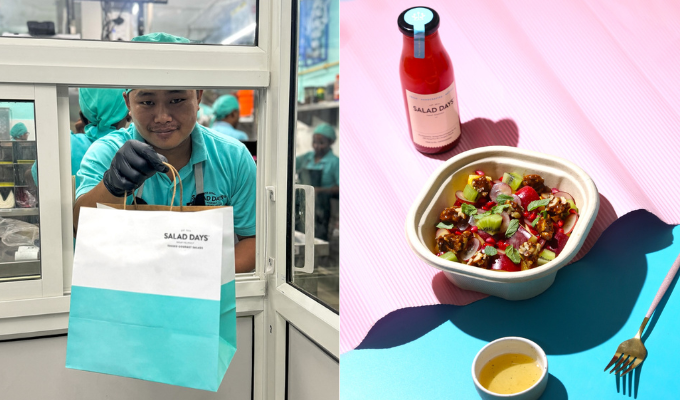
At Salad Days, a day doesn’t start with orders flashing on a screen. It starts with produce. Fresh ingredients arrive, get graded, checked, and only then move into prep for the rush ahead. Nothing slips through on assumption. If it doesn’t look right or meet quality benchmarks, it doesn’t move forward. Storage and prep are tightly controlled, with temperature and hygiene doing a lot of the heavy lifting behind the scenes.

Food is assembled only when an order comes in. Never before, never “just in case”. The last checkpoint is dispatch, where timing, accuracy, and packaging have to line up perfectly. Miss any one of those, and the meal hasn’t done its job. Customers may never see these cloud kitchens, but they are anything but casual. They run on discipline, repetition, and systems designed to deliver the same outcome, every single day.

That same thinking defines how Salad Days looks at food more broadly. The brand believes good food doesn’t need layers of engineering to feel premium. When ingredients are grown with care, handled lightly, and cooked honestly, they speak for themselves. Convenience here isn’t about speed at all costs; it’s about trust.

Health, taste, and delivery are not treated as competing priorities or marketing pillars; they emerge naturally from getting the fundamentals right, day after day. Time is respected, the table is set with intention, and nothing arrives as an afterthought. This model proves that when food is made with care and shared without excess, it can settle quietly into people’s routines, becoming part of daily life rather than just another transaction.

A Different Definition of Progress

Varun Madan, Founder & CEO, Salad Days

Where much of the healthy food category adds layers to signal value, Salad Days has stripped them away. The brand operates on the premise that progress lies in precision with doing fewer things, but better. Health is not exaggerated, convenience is not rushed, and taste is not sacrificed in the name of efficiency.

Following this philosophy, the brand is intentional with its operating principle. Packaging follows the logic of the meal: hot and cold elements are kept apart, dressings are sent separately, and containers are chosen for performance rather than appearance. Sustainability is approached with the same discipline: less material, no unnecessary layers, and steady improvement without compromising freshness. What arrives is not the result of a single innovation, but of systems designed to protect quality at every step.

Where Transparency Leaves the Screen and Enters the Soil

The brand’s SlowDown experiences are deliberately unpolished, designed to take customers out of the app ecosystem and place them directly on the land where their food is grown. Set at the Salad Days farm, these picnics and seasonal gatherings invite people to slow their pace, walk the fields, pick greens or strawberries, share a meal, and see what actually goes into growing produce at scale without leaning on excessive chemicals.

There are no scripted brand moments or polished narratives. Visitors see soil health practices up close, understand how pest control is managed, and witness the constraints and trade-offs that accompany real farming. The idea is simple: if freshness and quality are central to the brand’s promise, they should be open to scrutiny.

Over time, SlowDown has reshaped loyalty. Those who attend do not just return as repeat customers; they return with conviction. The relationship moves from transactional to relational, from ordering out of convenience to advocating out of belief. In a category where “farm-fresh” is often reduced to language, Salad Days has chosen opening the farm, accept scrutiny, and let lived experience do the work of persuasion.

Built, Not Broadcast

Freshness claims are easy to print and hard to defend. What separates the credible from the performative is not language, but systems. Packaging decisions in the Salad Days kitchens begin with function. Food safety and performance come first, without exception. Containers are evaluated on their ability to protect temperature, texture, and balance in transit. Environmental responsibility proves itself with recyclability, reduced material use, and responsible sourcing. Cost is a consideration, but never a shortcut.

The same evidence-led approach governs communication. Instead of absolutes, there is specificity. Ingredients are named, processes are visible, and people are introduced. The story is not amplified because it does not need to be. Customers recognise when something has been built patiently, and when it has merely been staged.

A Commercially Honest Hierarchy

Every high-volume food business eventually faces the same trade-off: ideals versus execution. Salad Days has resolved this by prioritising function first. If a meal does not arrive fresh, if packaging fails in transit, or if taste and nutrition do not hold, the model breaks. Everything else becomes irrelevant. This insistence on function is not philosophical; it is commercial.

Cost follows closely, for equally practical reasons. Healthy food, in this model, is not meant to sit in a premium corner accessible to a few. The objective is to keep healthy food within reach, not elevate it into an aspirational price bracket.

Sustainability sits third in the hierarchy, but not outside it. Rather than being treated as a separate initiative or a headline promise, it is embedded into daily decision-making within the constraints of function and cost. The ambition is not to signal perfection, but to build longevity, proving that in a high-volume food business, sustainability is about disciplined progress without eroding credibility or access.

The Discipline of Measurement

Success is not measured through surveys or sentiment alone, but through what customers actually do. Repeat orders and retention are the first filter because they are brutally honest. If customers do not come back, nothing else matters. Cohort behaviour is tracked closely; how often people order, how that frequency changes over time, and whether the brand becomes part of a weekly rhythm rather than an occasional fallback.

Above that sit engagement metrics that reflect maturity. Organic I2M%, M2O%, and subscription renewals indicate trust, exploration, and reduced friction. These signals matter because they point to a brand that is being chosen deliberately, not opportunistically.

Food trends move fast; food habits do not. Salad Days seems to understand the difference. By anchoring itself in routine rather than reinvention, it positions health not as a moment, but as a practice. If the future of eating is shaped less by what excites and more by what lasts, then this model of quiet, exacting, and built for repetition, offers a compelling direction.


Latest News

Unlocking Growth in Semi-Urban India

By mid-afternoon on November 11, the ballroom at the Jio World Convention Centre was humming with a peculiar tension—part...