


With a landmark restaurant in Sorena and Tier 2 expansion in sight, Monarch Liberty is betting on distinctive dining experiences to fuel its next growth phase.
Dining out is increasingly becoming an occasion in itself, creating room for hospitality businesses to move beyond conventional restaurant formats and develop destinations built around food, design and socialising. From specialised dining concepts to expansive food-and-beverage spaces, the sector is opening up opportunities for operators to differentiate themselves through distinct experiences and diversified portfolios.
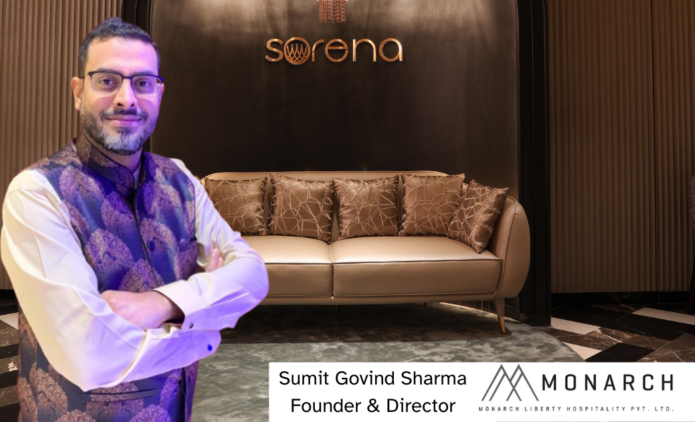
Monarch Liberty Hospitality has adopted this approach as it expands its footprint across the hospitality sector. In June 2026, the group launched Sorena, an 11,000 sq. ft. duplex dining and bar concept spread across the 11th and 12th floors in Bandra. The opening takes its portfolio to six properties in approximately four years and represents its most significant single-property commitment since its founding.
Sumit Govind Sharma, Founder and Director, Monarch Liberty Hospitality, recalls that the company’s first venture was Eve Powai, which received a positive response. Its success gave the team the confidence to pursue hospitality as a business.
“We have always emphasised guest experience. The experience a guest takes away from any of his restaurants is extremely important to us,” he points out.
Why Distinct Restaurant Concepts
Differentiation remains central to the group’s approach to restaurant development, with each concept built around a distinct cuisine, identity and dining proposition. By catering to varied consumer preferences through its portfolio, Monarch Liberty Hospitality aims to strengthen its presence in Mumbai’s competitive dining market.
The group initially partnered with experienced operating partners to understand the hospitality business and strengthen its operational expertise.
As a result, today, Monarch has four restaurants – EVE, TAT, Que Sera Sera and now Sorena. EVE is a global cuisine restaurant serving Indian, Chinese, Thai, Continental and Japanese food. With three outlets across Powai, Worli and Santa Cruz, EVE is the group’s most successful brand, prompting it to expand the concept more extensively than its other offerings. The Santa Cruz outlet opened last year.
The group’s other concepts cater to more specific culinary preferences. Que Sera Sera, which operates with a different operating partner, focuses primarily on European cuisine, with an emphasis on Italian food.
TAT, meanwhile, reflects Sharma’s personal connection with Indian regional cuisine, particularly seafood. The concept celebrates the coastal food traditions of India’s nine coastal states, covering the coastline from Maharashtra to West Bengal, alongside select Sri Lankan dishes.
He points out that traditional Indian food continues to hold a strong place in consumers’ dining preferences, even as international cuisines gain popularity. “No matter how often we eat pizzas, pastas, burgers and other international dishes, we eventually return to the traditional food we have grown up eating. It is our comfort food,” he says, adding that dal chawal remains his personal comfort food.
Sorena introduces a distinct culinary proposition by bringing together influences from five cities: Mumbai, Istanbul, Sicily, New York and Tokyo. Its positioning, “Five cities, one place”, reflects the concept’s approach to combining diverse culinary influences within a single dining destination.
A Large-Format Bet
Monarch Liberty Hospitality has made its largest single-property investment to date with Sorena, with an 11,000 sq. ft. area in Bandra, Mumbai. Spread across the 11th and 12th floors on Linking Road, the property accommodates more than 250 guests.
Sharma shares that the decision follows four years of studying Mumbai’s dining market and consumer behaviour. The group also draws on insights from food delivery platforms such as Zomato and Swiggy to understand evolving customer preferences and identify opportunities for new formats.
“Sorena is, honestly, our most ambitious project to date,” he says, highlighting the scale of the investment and the group’s approach to identifying the right location and format.
He explains that the group sees an opportunity for a large-format establishment that combines a comprehensive dining experience with a strong bar offering, rather than focusing exclusively on food. Despite the high rental costs associated with prime locations in Mumbai, the group believes the concept has the potential to attract consumers seeking both dining and social experiences.
The Evolving Consumer
Mumbai’s dining landscape is evolving as consumers become more adventurous with food, seek authentic international cuisines and draw inspiration from social media. Restaurants are also facing growing expectations around ambience, service and marketing, making the overall dining experience increasingly important to long-term success.
Sharma identifies two key factors shaping consumer behaviour: increased international travel and the influence of social media, particularly Instagram. Well-travelled consumers are increasingly familiar with global cuisines and are more willing to explore specialised offerings. Unlike earlier trends, when international dishes were often adapted to Indian tastes, diners are now showing greater interest in authentic culinary experiences.
“Today, consumers are much more willing to explore authentic and specialised offerings,” he says, pointing to the emergence of standalone restaurants serving cuisines such as Mexican and Korean food.
He adds that international travel exposes consumers to different culinary traditions, creating expectations for similar experiences when they return to India. Social media further accelerates this trend, with restaurant discoveries, dishes and dining experiences inspiring consumers to visit new establishments.
Beyond culinary exploration, consumers increasingly expect restaurants to deliver a comprehensive experience. He identifies four essential pillars of a sustainable food and beverage business: food, ambience, service and marketing.
Food remains the foundation of the restaurant experience, regardless of the establishment’s design or visual appeal. An attractive setting may draw first-time visitors and generate social media attention, the quality of the food ultimately determines whether customers return.
“No matter how beautiful a restaurant is, if the food is not good, customers might visit once or twice to experience it and share it on Instagram. However, they will not return regularly,” he explains.
Ambience is the second pillar, as diners increasingly expect quality food in an appealing environment. Service is equally important, with internationally travelled consumers bringing higher expectations of hospitality and customer engagement to their dining experiences. Marketing becomes the fourth pillar, noting its importance in attracting customers and building awareness in an increasingly competitive market.
Monarch’s Revenue Ambitions
Monarch Liberty Hospitality attributes its reported revenue growth of 40-45% over the past four years to its focus on guest experience, employee empowerment and customer loyalty. As the group expands its portfolio with Sorena, it is looking to strengthen revenue contributions from existing restaurants while building new growth opportunities.
Sharma highlights the importance of empowering employees across roles to make decisions that improve the dining experience, including resolving customer complaints at the restaurant level.
“We give every member of our team the freedom to make decisions that improve the guest experience,” he explains, noting that even frontline employees can take the initiative to replace a dish if a customer is dissatisfied. He adds that positive dining experiences encourage repeat visits and recommendations to friends and family, making word-of-mouth advocacy an important contributor to business growth. The feedback from guests at Eve and Sorena reinforces the group’s emphasis on delivering memorable experiences.
Sorena is expected to contribute approximately 30% of the group’s revenue in its first year of operations. Spanning 11,000 sq. ft. across two floors and accommodating more than 250 guests, the property offers the scale to support the group’s revenue ambitions.
Sharma explains that the concept differentiates itself from other food-focused restaurants at Mansion One by placing a strong emphasis on beverages alongside its food offering. The group aims for an approximately equal revenue contribution from food and drinks.
“We are hoping that approximately 50% of our revenue will come from food and the remaining 50% from drinks,” he says, outlining the property’s commercial strategy. The group also plans to position Sorena as a high-energy bar in the late evening, allowing guests to transition from dining to socialising in the same venue. The vision is to build a destination where customers can enjoy dinner, stay for drinks and spend time with friends until around 11:30 pm.
Monarch Liberty Hospitality is targeting revenue of approximately Rs 100 crore in the current fiscal year, with its six existing restaurants continuing to serve as key contributors.
Sorena is expected to provide an additional growth driver, while the group is also evaluating the possibility of opening one or two more restaurants in Mumbai. The group already has a strong presence in Mumbai and believes further openings could strengthen its position in the city’s dining market. The combined contribution of its existing portfolio, Sorena and potential new properties is expected to support the group’s ₹100-crore revenue ambition.
Tier 2 Expansion on Radar
Monarch Liberty Hospitality is prioritising Mumbai for the current financial year while evaluating expansion opportunities in Tier 2 cities in the next financial year. The group sees potential in markets where consumers have spending power but may have limited access to the diverse dining concepts available in larger metropolitan cities.
The group is also exploring opportunities in cities such as Jaipur, Surat and Chandigarh, where differentiated restaurant concepts could address an underserved demand for premium dining experiences.
He notes that established restaurant players and intense competition make expansion into metropolitan markets such as Bengaluru, Gurugram, Hyderabad and Delhi a different proposition. In contrast, Tier 2 cities offer opportunities to introduce concepts that consumers may not currently have access to in their local markets.
“People in these markets have significant spending power, but the range of dining experiences available to them may be more limited,” he explains, highlighting the potential to take the group’s existing concepts beyond Mumbai.
He believes EVE, the group’s global cuisine restaurant, could perform well in markets such as Surat and Jaipur. “I am confident that if we offer consumers these experiences, there will be a strong response,” he says.
Focus For Next
Over the next six months, the group’s primary focus remains on establishing Sorena, its latest and most ambitious venture, while driving customer engagement through festive offerings and seasonal dining experiences across its restaurants.
Sharma says the upcoming festive season presents an opportunity to introduce special menus, activities and pop-ups that encourage repeat visits. At TAT, the group celebrates festivals from different parts of the country. Following its Onam and Durga Puja celebrations, the restaurant is preparing for Diwali.
“We organise special activities and introduce new menus and pop-ups to keep customers engaged,” Sharma notes, explaining how seasonal programming helps create fresh reasons for customers to revisit the restaurants.
Diwali remains a key focus across its portfolio, followed by Christmas and New Year celebrations. Monarch is also considering Valentine’s Day experiences at EVE, Que Sera Sera and Sorena, targeting younger consumers, including Gen Z, who increasingly seek occasion-led dining experiences.
Sharma emphasises that these initiatives are designed to go beyond the food offering by creating distinctive experiences around important cultural and social occasions. By refreshing menus and introducing limited-period activations, Monarch Liberty Hospitality aims to strengthen customer engagement and encourage repeat visits while continuing to build Sorena.