
Friday, January 9, 2026

Progressive or Conservative? Inside the Great Indian Cuisine Debate

Must Read

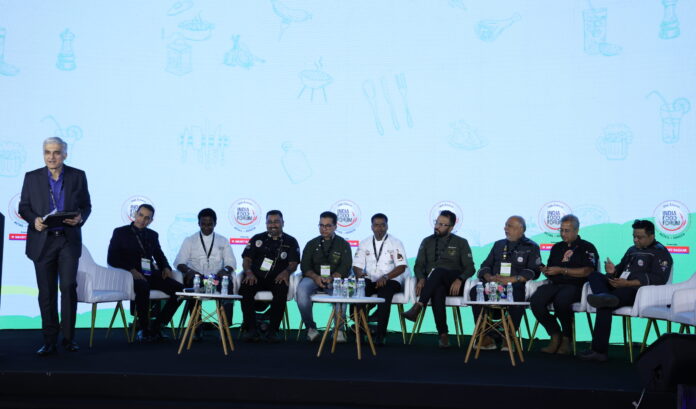
Opening the session, Dhiren Kanwar, Founder of Zaad Ventures and the moderator of the discussion, set the tone with a provocation that framed the entire debate. “Indian food has travelled from the streets to star restaurants, from brass thalis to glass domes. But as a cuisine evolves, are we elevating it—or erasing its essence?” Inviting the audience to define Indian cuisine in a single word—tradition, soulful, messy but delicious, diverse—Kanwar made it clear that the dilemma wasn’t academic. It was personal.

Progress Without Amnesia

Chef Abdul Qader

The first response came from Chef Abdul Qader, who firmly positioned evolution as inevitable—but not at the cost of identity. “Change is the only constant. We are not losing anything—we are progressing. But we must move forward without losing our identity and the core of Indian cuisine.”

For Chef Michael Swamy, the anchor lay in family and memory. “Indian cuisine is a family-oriented cuisine. Even if you reimagine it or plate it in a French way, you cannot take the family out of it. Taste, flavour, and diversity must remain—and never forget the family.”

Chef Anees Khan, aligning himself with the progressive camp, offered what would become a recurring refrain through the session: “Keep the soul, modify the rest. Plate it differently, elevate it—but the flavour and the soul must stay intact.”

Emotion on the Plate

Chef (Dr.) Amol Rawool

Emotion emerged as a powerful undercurrent when Chef (Dr.) Amol Rawool framed Indian food as an emotional language. “Indian cuisine is all about emotions. Innovation in plating is the need of the day, but those emotions must be expressed on the plate. That is what modern Indian fusion is today.”

Kanwar pushed the panel further: Where does evolution end and erosion begin?

Is Modern Indian Celebrating or Compromising?

Ravi Wazir

Restaurant and F&B Business Specialist Ravi Wazir answered with history. “Rajma isn’t Indian in origin. Biryani didn’t originate here either. Yet today, they are deeply Indian. A cuisine evolves over centuries, not lifetimes. Whatever avatar Indian food takes, it will still remain Indian.”

That confidence was tempered by Chef Suresh Shetty, who repeatedly returned to one non-negotiable. “Progressive cuisine is fine. Innovation is fine. But please—keep the taste authentic. The moment you eat the food, nothing should feel wrong.”

When the Mind Eats Before the Mouth

Chef Vijayendra Pawaskar

One of the sharpest critiques of over-modernisation came from Chef Vijayendra Pawaskar, who spoke not just as a chef, but as a diner. “When I walk into a restaurant, I already have a memory of butter chicken in my mind. If you give me butter chicken mousse, I may admire the innovation—but I’m not satisfied.” He recalled leaving chef’s tables impressed, yet still craving “something that satisfies the soul.” “You must know how to make butter chicken before you try to make butter chicken mousse.”

Tradition, Territory, and Sustainability

Chef Dev Kasalkar

Representing a deeply rooted regional voice, Chef Dev Kasalkar from Kolhapur argued that some foods are inseparable from their context. “Pani puri belongs to the street. That taste comes from the hand that serves it. Modern plating often doesn’t affect the palate in the same way.” Kasalkar also flagged a less-discussed issue: sustainability. “Climate change and ingredient availability matter. If we lose traditional ingredients and tools, we lose flavours. Progress is important—but culture and sustainability must stay in mind.”

Plating vs Palate

Chef Michael Swamy

As the debate shifted to presentation, Chef Michael Swamy challenged chefs to introspect. “We have more vegetables and more colour than continental cuisine, yet our food still looks brown. Indian food can look beautiful—we just don’t play with it enough.”

But Pawaskar countered with a reminder from history. “A Maharashtrian thali or a Kerala sadhya had 21–25 elements, plated thoughtfully. That was plating—and it satisfied the soul. Today, we eat with our eyes, but our soul stays hungry.”

Who Are Chefs Cooking For?

Ravi Wazir brought commercial realism into the room. “If I’m cooking for myself, I’ll cook one way. If I’m cooking for Gen Z guests who want pani puri shots, I’ll bow to that—because there’s a commercial agenda.” Authenticity, he argued, is deeply personal. “My mother makes the best dhansak. Yours does too. Nostalgia defines authenticity—and that’s why no single version can satisfy everyone.”

Chef Vivek Kadam

Chef Vivek Kadam added a practical lens, using Malvani cuisine as an example. “For a traditional audience, I’ll serve bakri and kalwan as is. For a younger audience, I might deconstruct it—but the flavours remain the same. Context decides presentation.”

The Audience Speaks

Audience interventions repeatedly reinforced one truth: presentation may attract, but taste builds loyalty. A Gen Z attendee dismantled stereotypes. “We’ll go once for fancy plating. But if we’re confused by the taste, we won’t return. Most of us still go back for flavour, not Instagram.”

Others spoke of disappointment when global dishes lost authenticity—or when Indian dishes looked stunning but tasted hollow. When asked which dishes should never be deconstructed, responses poured in: biryani, dal chawal, rasam rice, khichdi, aloo paratha.

The Future of the Indian Plate

Looking ahead, Chef Michael Swamy predicted a regional renaissance. “We are moving into a regional space—taking regional food global. But technique is being forgotten. Some dishes may disappear because chefs no longer know how to make them.”

Chef Anees Khan

Chef Anees Khan saw opportunity in storytelling. “Our plates should tell stories—of regions, memories, ingredients. That’s how we preserve tradition with modernity.”

Ravi Wazir offered a long-view perspective. “We are custodians for the next two or three generations, not the next thousand years. Some dishes will be forgotten—and rediscovered. That cycle will continue.”

What Must Never Change

When asked to name the one sacred element of Indian cuisine, the panel was remarkably aligned. Chef Abdul Qader: “Original taste.” Chef Michael Swamy: “Flavour must stay; plating can change.” Chef Vijayendra Pawaskar: “Flavour and convenience—together.” Chef Anees Khan: “Balance of rasa—sweet, sour, spicy.” Chef Amol Rawool: “Process and patience.”

Chef Suresh Shetty

Chef Suresh Shetty: “Taste, safety, hygiene, and no waste.” Ravi Wazir: “Indian spices—the holy grail of flavour.” “If you smell it blindfolded and know it’s Indian—that’s flavour,” Wazir concluded.

Closing Note

Dhiren Kanwar

As Dhiren Kanwar wrapped up, he distilled the debate into a single wish: “Whether you’re team progressive or team conservative, may your food always have soul.” The Indian cuisine dilemma, it turns out, isn’t about choosing sides. It’s about holding memory and modernity in the same hand—and cooking responsibly for both today and tomorrow.

Latest News

Marico partners IIT Tirupati to develop sustainable bioactives extraction for healthier edible oils

Marico Limited has entered a strategic research collaboration with the Indian Institute of Technology (IIT) Tirupati to pioneer sustainable...