


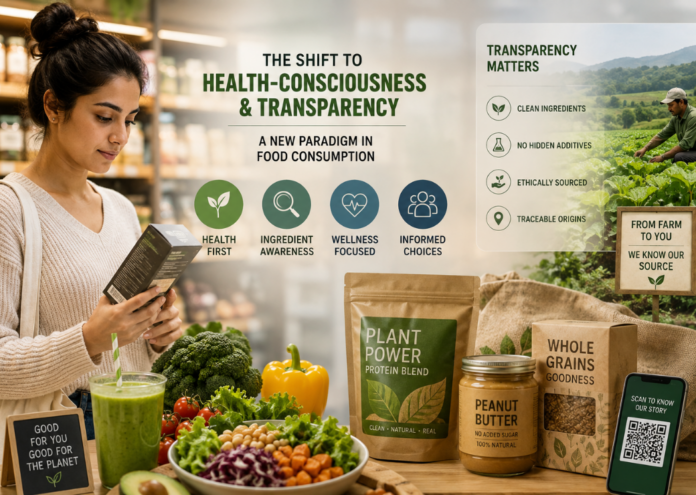

The profound shift towards health-conscious and transparent food consumption is reshaping not only consumer behaviour but also the very foundations of brand strategy and product innovation in the food industry.
The most consequential transformation shaping the development of new food brands in the contemporary market is the pronounced shift towards health-consciousness and transparency in consumer consumption and purchasing behaviour. This phenomenon is not merely a trend but a paradigm shift, driven largely by a new generation of consumers who exhibit heightened awareness and discernment regarding the foods they consume.
Drivers of the Shift
- Heightened Nutritional Awareness: Consumers today are increasingly scrutinising nutritional value, ingredient lists, and the presence of additives or preservatives. This vigilance is fuelled by widespread access to information and a growing body of research linking dietary choices to long-term health outcomes.
- Demand for Transparency: There is a clear expectation for brands to provide comprehensive information about sourcing, production processes, and supply chain practices. Ethical considerations—such as fair trade, sustainable agriculture, and humane treatment of workers and animals—are now integral to purchase decisions.
- Alignment with Personal Values: Modern consumers seek products that resonate with their personal values, including environmental sustainability, social responsibility, and clean-label assurance. In many cases, the story behind the brand is as important as the product itself.
Implications for Food Brands
This shift necessitates a fundamental rethinking of how food brands are conceptualised, developed, and marketed. No longer is it sufficient to offer convenience or traditional appeal alone. Brands must now:
- Innovate in Product Development: Focus on healthier formulations, transparent labelling, and the exclusion of controversial ingredients.
- Revise Brand Communication: Craft marketing narratives that highlight not just product features, but also supply chain integrity, sustainability commitments, and community engagement.
- Adopt Responsible Supply Chain Practices: Ensure that every link in the supply chain upholds the values and promises made to the consumer, particularly around traceability and ethical sourcing.
Why This Shift Matters Now
- Digital Empowerment: The proliferation of digital platforms has equipped consumers with the tools to research, compare, and share information about food products, accelerating the demand for authenticity and accountability.
- Competitive Differentiation: Brands that successfully adapt to these evolving expectations are positioned to generate higher levels of trust and loyalty among their audience—critical advantages in a crowded marketplace.
- Regulatory and Social Pressures: Increasingly, governments and advocacy groups are mandating greater transparency and healthier food options, making it imperative for brands to stay ahead of compliance and public scrutiny.
This profound shift towards health-conscious and transparent food consumption is reshaping not only consumer behaviour but the very foundations of brand strategy and product innovation in the food industry. Brands that embrace these changes—by prioritising quality, honesty, and values-driven engagement—will be best positioned to thrive both now and in the future.
Nutrition, Sustainability, or Social-impact Claims Materially Influence Buying
Nutrition, sustainability, and social-impact claims exert a profound influence on consumer purchasing decisions, particularly within urbanised and economically developed markets. In these environments, consumers often demonstrate heightened awareness of health and environmental issues, as well as a receptiveness to brands that espouse ethical values.
The presence of such claims can serve as decisive differentiators, motivating consumers to select one brand over another, pay a premium for perceived quality or integrity, and cultivate enduring brand loyalty. This phenomenon is especially pronounced among younger consumers, affluent demographics, and individuals who utilise digital platforms to inform their choices. These groups actively seek products that align with their personal principles and lifestyle aspirations, making them more likely to respond positively to nutrition, sustainability, or social-impact messaging.
Conversely, the degree of influence exerted by these claims diminishes in rural regions and among segments characterised by high price sensitivity. For these consumers, practical considerations such as cost, taste, and convenience frequently outweigh concerns related to nutrition or sustainability.
Moreover, in markets where public awareness of health and environmental issues remains nascent, or where regulatory oversight and enforcement are relatively limited, such claims may not materially affect purchasing patterns. In these contexts, the effectiveness of nutrition, sustainability, or social-impact claims is contingent on the maturity of the market, socio-economic conditions, and the prevailing level of consumer education.
The extent to which nutrition, sustainability, and social-impact claims influence buying decisions is shaped by a complex interplay of geographic, economic, and demographic factors. Understanding these nuances is essential for food brands seeking to strategically position themselves within diverse markets and to tailor their messaging for maximum impact.
Digital/AI Materially Improved Brand Building/GTM
Digital, data, and AI technologies have materially improved brand building and go-to-market effectiveness in several ways within the food industry. Additionally, digital platforms and predictive analytics have streamlined inventory management and demand forecasting, allowing companies to respond rapidly to market shifts and optimise supply chain operations. These innovations have empowered organisations to build stronger brand equity, improve customer loyalty, and achieve faster, more efficient market penetration.
The areas where Digital Data or AI has improved Brand Building or GTM are:
- Consumer Insights and Trend Identification: Advanced analytics powered by digital and AI technologies allows companies to discern emerging consumer preferences, forecast demand fluctuations, and identify white-space opportunities with greater accuracy and speed. As a result, brands are better positioned to anticipate shifts in the market and develop targeted strategies that resonate with evolving consumer needs.
- Personalised Marketing and Customer Engagement: With the help of data-driven algorithms and AI tools, brands can now segment their audiences with precision and deliver tailored messages, offers, and product recommendations. This approach not only increases engagement and conversion rates but also enhances customer satisfaction, ultimately fostering deeper brand loyalty.
- Optimisation of Product Assortments and Supply Chains: Digital technologies and AI-driven forecasting models support brands in optimising their product portfolios and managing inventory more efficiently. Predictive analytics inform decisions regarding stock levels, product launches, and discontinuations, minimising waste and maximising profitability.
- Enhanced Customer Experience: The use of AI-powered chatbots, virtual assistants, and recommendation engines has streamlined customer service and support functions.
- Agility in Go-to-Market Execution: Digital platforms enable brands to rapidly test, iterate, and scale go-to-market strategies, adjusting campaigns in real time based on performance data. This agility allows for more effective allocation of marketing resources and optimises ROI in dynamic environments.
Areas Where Digital, Data, or AI Have Failed to Deliver ROI
The deployment of sophisticated AI systems often involves significant financial investments and technical expertise. For smaller organisations or those operating in regions with limited digital infrastructure, these costs may outweigh potential benefits, making it difficult to achieve positive ROI.
- Impersonal or Ineffective Customer Interactions: While automation can improve efficiency, excessive reliance on AI-driven interactions may alienate consumers who value human connection or nuanced service. In some cases, automated systems misinterpret complex customer needs, eroding brand trust and diminishing effectiveness.
- Regulatory, Ethical, and Organisational Challenges: The adoption of digital, data, and AI technologies raises concerns regarding data privacy, algorithmic transparency, and ethical use. Failure to proactively address these issues can lead to compliance violations, reputational damage, and lost consumer confidence—further undermining any anticipated return on investment.
Visible Fragile Food Value Chain
In the current landscape, the most vulnerable—or fragile—segment of the food value chain is the supply chain and sourcing stage. This phase serves as the backbone that connects agricultural producers and raw material suppliers with processors, manufacturers, distributors, and ultimately, consumers. Its fragility stems from a web of interdependencies and external risks, making it prone to disruption from multiple directions.
Why Supply Chain and Sourcing Are Most Fragile
- Reliance on a diverse supplier network
- External shocks
- Volatile commodity prices
- Logistics & Transportation
- Regulatory and compliance risks
Early Signals of Stress
Supply chain disruptions seldom occur overnight. More often, they are preceded by subtle but measurable warning signs that, if identified early, enable businesses to take corrective action before operations are affected. Indicators such as increasing lead times, delayed deliveries, frequent backorders, fluctuating inventory levels, rising raw material costs, inconsistent product quality, or reduced communication from suppliers can all signal underlying vulnerabilities.
To build resilient supply chains, companies must adopt a proactive approach. Diversifying supplier networks, investing in robust supplier management systems, strengthening demand forecasting, and maintaining strategic inventory buffers can significantly reduce operational risks. Timely interventions—such as onboarding alternate suppliers, renegotiating sourcing contracts, or adjusting procurement and inventory strategies—help minimise disruptions and ensure business continuity.
As food brands expand into Tier 2 and 3 cities, supply chain resilience becomes even more critical. These markets offer immense opportunities, driven by rapid urbanisation and increasing demand for branded food products. However, fragmented distribution networks, limited cold-chain infrastructure, regulatory variations and complex last-mile logistics often make expansion challenging.
Consumer preferences also vary widely across regions, requiring brands to localise product offerings, pricing and marketing strategies. Companies that invest in agile logistics, technology-driven visibility, local partnerships and data-backed decision-making will be better positioned to scale efficiently, maintain product quality and build lasting consumer trust across diverse geographies.
Critical Areas of Opportunities
For investors evaluating food brands, one of the most critical questions to ask is how the company plans to scale sustainably across India’s Tier 2 and 3 markets. Investors should seek clarity on how the company intends to strengthen fragmented distribution networks, enhance cold-chain and warehousing infrastructure, and ensure efficient transportation to maintain product quality, particularly for perishable goods.
Equally important is understanding how the brand plans to address the diverse consumer preferences, varying price sensitivities and regional tastes that characterise these markets through localised product offerings and targeted marketing initiatives. Companies must also demonstrate their ability to navigate differing state and municipal regulations, including food safety standards, labelling requirements and taxation, without compromising operational efficiency.
Investors should also evaluate the brand’s approach to improving supply chain visibility and optimising inventory management, to ensure product availability. Finally, building brand awareness and consumer trust remains fundamental to long-term success. Understanding how the company measures the effectiveness of local marketing initiatives, community engagement and customer acquisition strategies provides valuable insight into its ability to establish a strong and sustainable presence in these emerging markets.